- Pontefract Castle 14th Century
- 1364 - On 14th July 1364, John of Gaunt, by right of his wife Blanche (third cousin), became the new lord of Pontefract and received by royal charter a confirmation of all the privileges which his father-in-law, Henry of Grosmont, the 1st Duke of Lancaster, had had before him.
- 1385 - On the 14th July 1385, Richard II visited Pontefract Castle, on his first military campaign as leader, to engage the invading Scots who, bolstered by a French army of 1,000 men-at-arms and 600 bowmen under General Jean de Vienne, were attacking northern England. He arrived at York on the 16th. John of Gaunt was preparing to meet Richard at Durham after assembling men and supplies from Pontefract.
- 1399 - On 13th or 14th July 1399, Henry Bolingbroke reached Pontefract with an estimated sixty supporters, after landing at Ravenspur on the Humber estuary some two weeks before. As he progressed across Yorkshire, his followers increased with records showing thirty-seven knights and esquires and attendants joining him. At Doncaster, on the 16th of the month, he was similarly acclaimed by the Earl of Northumberland and his son, Henry 'Hotspur' who had become disillusioned with Richard II's administration of northern England.
- Pontefract Castle 16th Century
- 1503 - On 14th July 1503, Margaret Tudor, eldest daughter of Henry VII, arrived at Pontefract on her way from Richmond Palace to Scotland to meet her husband, James IV. The marriage had been completed by proxy on 25th January that year at Richmond Palace with the Earl of Bothwell as proxy for the Scottish king. She was met by deputations seven, four and two miles from Pontefract and escorted to the town to be received by its mayor, burgesses, inhabitants and ‘the abbot in pontifical and all the convent’. She left on the 15th for York.
- Pontefract Castle 17th Century
- 1645 - On 14th July 1645, Nathan Drake, Royalist diarist, recorded: ‘ …the enemy…sending out stronge p’ties of horse towards Dauncaster & to Sandoll………It was tould us also this evening by the enemyes owne Souldyers that there was 5 Souldyers buryed this day of the Plague: they dyed in the howses in the Barly markit place…’
- Pontefract Castle 20th Century
- 1919 -
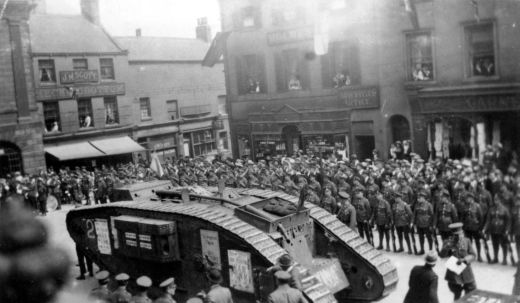
 On 14th July 1919, a World War I tank (tank No. 289) was awarded to Pontefract by General Benson in recognition of the town’s having subscribed over £2m in War Loans: it was kept at the castle, being removed on 26th September 1934 to Nevison’s Leap and later cut up for salvage in World War II.