- Pontefract Castle 17th Century
- 1637 - On 2nd July 1637, Sir John Jackson, MP, died. Knighted on 19 April 1619, in 1624, Jackson was elected Member of Parliament for Pontefract in the Happy Parliament. He was re-elected MP for Pontefract in 1625, 1626 and 1628 and sat until 1629 when King Charles decided to rule without parliament for eleven years.
- 1644 -
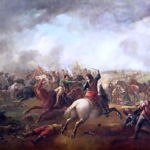 On 2nd July 1644, Cromwell was victorious at the Battle of Marston Moor at Tockwith, near York. Some of the Royalist survivors escaped the battlefield and took refuge at Pontefract Castle, where they joined the garrison under the command of Sir Richard Lowther.
 - 1645 - On 2nd July 1645, Nathan Drake, Royalist diarist, recorded: ‘ in the Afternoone our dutchman playd his Cannon from the Platforme by Treasurers Tower into the Markitt place, where we saw 2 or 3 kild dead..’ The unnamed ‘dutchman’ is first mentioned in the diaries on 10th June this year, most probably associated with his countrymen’s draining operations in the east of Yorkshire under the patronage of King Charles I.
- Sandal Castle 15th Century
- 1440 - On 2nd July 1440, on the day Henry VI sealed the terms of Charles, Duke of Orleans’ release from Imprisonment, he appointed a new Lieutenant-General and Governor of France, Richard, Duke of York (lord of Sandal Castle) for the second time. York was promised an annual income of £20,000 (£20.3 million in today’s money) to support his position.
- 1483 - In the first days of July 1483, Richard III’s (lord of Sandal) northern forces of around four thousand men under the command of the Earl of Northumberland and Richard Ratcliffe arrived In London with Richard greeting them bareheaded as a sign of respect. Richard was preparing to avoid/avert any troubles surrounding his coronation days later.
