- Pontefract Castle 13th Century
- 1297 - On 9th July 1297, Edward I ordered the tenants of Thomas of Lancaster’s (Earl of Lancaster and future lord of Pontefract) late father, Edmund, to do homage to Thomas, albeit he was underage, probably nineteen.
- Pontefract Castle 14th Century
- 1398 - On 9th July 1398, Henry Bolingbroke was at Pontefract Castle with his father, John of Gaunt, on his travels around the country. He had been ordered by Richard II to settle a dispute with Thomas Mowbray, Duke of Norfolk and ex-Earl Marshal, concerning ‘slanderous’ allegations of murder Henry had made against Mowbray. The settlement would be by way of a duel at Coventry in the autumn.
- Pontefract Castle 15th Century
- 1403 - On 9th July 1403, after Prince Henry (later to be Henry V) had assumed the formal lieutenancy of Wales, Harry Hotspur announced in Chester that Richard II, Pontefract’s most famous prisoner, had not died at Pontefract Castles in 1400 but would appear in public in eight days’ time with an army led by Hotspur’s father, the Earl of Northumberland. The House of Lancaster would be obliterated. One chronicler described Hotspur’s gullible followers as ‘a multitude of imbeciles of both sexes, defrauded by desire’.
- Pontefract Castle 17th Century
- 1645 - On 9th July 1645, the besieging Parliamentary forces began a fence from their works opposite Swillington Tower, along the hedge to Denwell Lane and from this position they greatly annoyed anyone coming from the castle to cut grass.
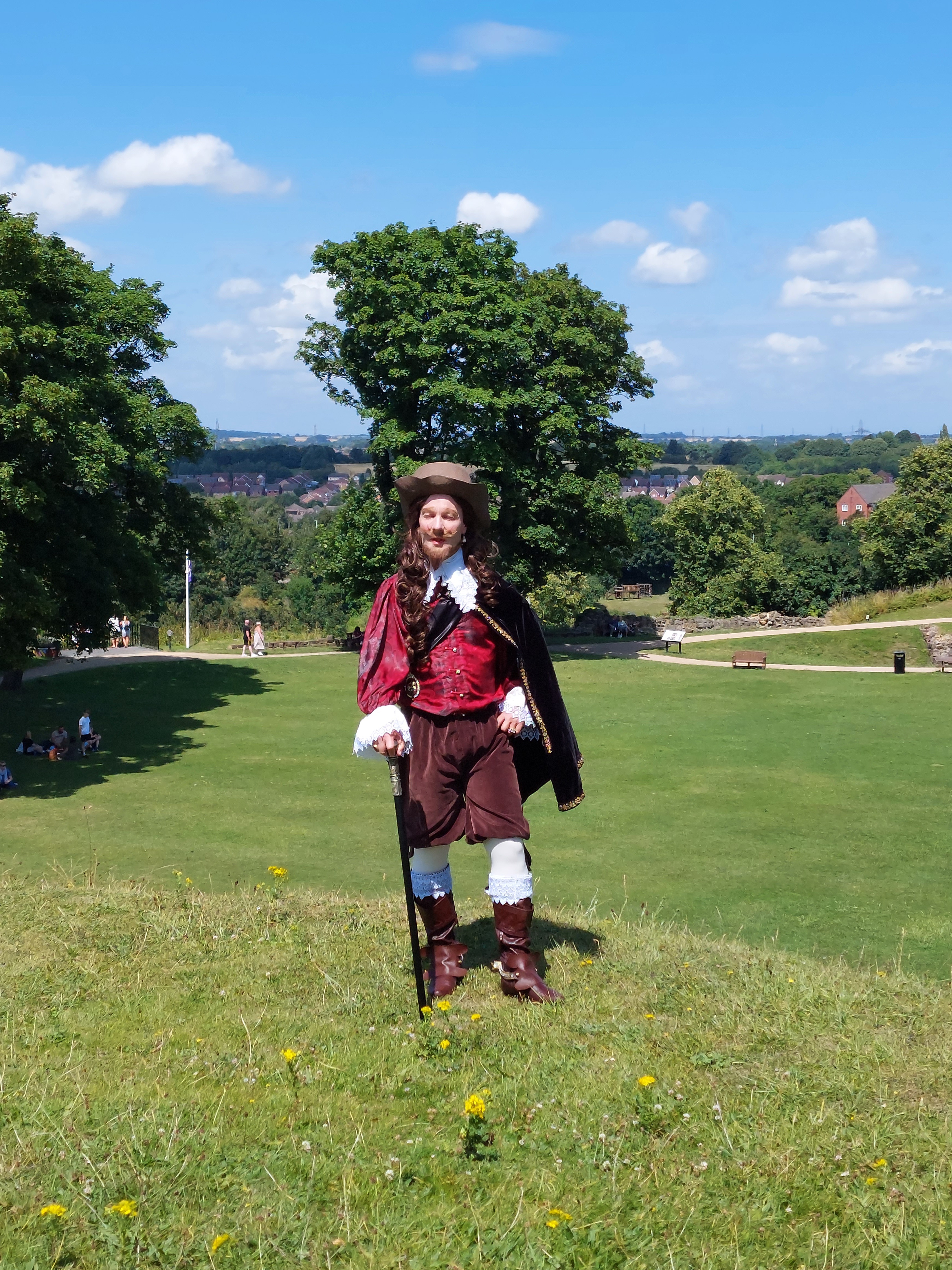
- Pontefract Castle 21st Century
- 2023 -
 On 9th July 2023, on the day of Pontefract’s Liquorice Festival, Daniel Williams assumed the role of King Charles I on his visit to the castle. Daniel, an avid ‘follower’ from childhood of Britain’s famously executed Civil Wars’ monarch, has appeared as Charles at a range of events over the past six years, such as the Gloucester History Festival, at Dunfermline, Scotland, the Cotswolds and many others. As Daniel remarked: the last time Charles I visited Pontefract was his staying at the castle on May 23 1633, during his 'Great Progress' of the nation to Scotland for his coronation in Edinburgh at the Palace of Holyroodhouse on 18th June.