This Coming Week In History
This week in history
| Date | Event |
|---|---|
| 17/7/1328 | The Chronicle of Lanercost records that on the 17th July 1328: The ‘young king [Edward III] gave his younger sister, my lady Joan of the Tower, in marriage to David, son of Robert de Brus, King of Scotland, he being then a boy five years old. All this was arranged by the king's mother the Queen [dowager] of England, who at that time governed the whole realm. The nuptials were solemnly celebrated at Berwick on Sunday next before the feast of S. Mary Magdalene. The King of England was not present at these nuptials, but the queen mother was there, with the king's brother and his elder sister and my lords the Bishops of Lincoln, Ely and Norwich, and the Earl of Warenne (owner of Sandal Castle) Sir Roger de Mortimer and other English barons, and much people, besides those of Scotland, who assembled in great numbers at those nuptials.’ |
| 17/7/1373 | On 17th July 1373, John of Gaunt, lord of Pontefract, landed at Calais with 6,000 men-at-arms and archers. With the assistance of Henry Percy, Earl of Northumberland, and the Duke of Brittany, the army marched towards Bordeaux hoping to engage with the French forces of Charles V in order to recover Aquitaine. On reaching Bordeaux, around December, the exhausted English army found a city devastated by famine and plague. Unanswered pleas, in January 1374, to Edward III for finance and reinforcements, compelled Gaunt to return to England. |
| 17/7/1394 | On 17th July 1394, seven weeks after the funerals of Mary de Bohun (his daughter-in-law)) and the earlier one of Constance of Castile (his wife), John of Gaunt held a meeting at Pontefract Castle along with: his brother, Edmund, Duke of York; his nephew, Edward, Earl of Rutland; and his brother Thomas, Duke of Gloucester. Probably, Henry Bolingbroke was also in attendance meaning that according to the entail of Edward III, the first, second, fourth and sixth in line to the throne were all present. A letter was sent to Richard II disclaiming any rumours of John of Gaunt plotting to obtain the crown for himself or his son. |
| 17/7/1645 | On 17th July 1645, Royalist Colonel Lowther sent a letter to Colonel General Poyntz that they were ready to discuss surrender as soon as the place and time was appointed. The besieging Parliamentary forces decided to take their time about discussions as they heard from a garrison captain that the castle had provisions for only 5 days or slightly more. The besiegers intended to starve out the garrison, then to strip the soldiers and pillage the castle. |
| 18/7/1317 | A meeting was arranged by Edward II to be held at Nottingham on 18th July 1317, regarding peace with the Scots, to which Thomas Earl of Lancaster, lord of Pontefract, and other magnates were summoned; but, as before, the Earl was absent. He excused himself as being unwell. Edward had accused the Earl of convoking illicit gatherings and of retaining very large numbers of men, thus disturbing the kingdom and frightening the people. Lancaster had denied this: he replied that he retained men only to uphold the King’s peace and lordship and he would come with his whole force to Newcastle on 11th August 1317 as he had been summoned to do. |
| 18/7/1484 | On 18th July 1484, after Richard III, lord of Sandal, had issued orders two months before to put the country on high alert because of murmurs of impending invasion by Henry Tudor, seditious rhymes were posted in prominent locations around London. One memorable and treasonous couplet pinned to the doors of St Paul’s ran: ‘The Cat, the Rat, and Lovell our Dog, Rule all England under a hog.’ The implications were clear: The Cat was Richard’s counsellor, William Catesby; the Rat being Sir Richard Ratcliffe, an influential figure in the northeast; Francis Lovell, Richard’s childhood friend and chamberlain; the hog, a scathing reference to Richard’s white boar emblem. |
| 18/7/1645 | On 18th July 1645, Nathan Drake, Royalist diarist, recorded: ‘This day, before 10 a Clock, Genrall Poynte Sent in a letter wth a Trumpitt to our Governor to give notise at what time and place the Treatye should beginner…..wch Trumpitt staid whilst servise was done in the hall & then tooke his answer backe…..they sett up a Tent in the Bottom Cloase under Baghill a little above Brode lane end wch they made Ready; and about 4 a ClockTheirs Genrall wth Collonell Ouerton & 9 offcers more Came wth him to the Barbican Gates where they met wth our Committies….The Committeyes for our p’ty was Sr Richard Hutton, Sr John Romsden, Sr George Wentworth, Leiutenant Collonell Gilbreth, and Mr Hirst….for them was MrWasthill, a lawyer, CollonellBright, Leiutenant Collonell Fairfax, and Leiutenant Collonell Copplay. They treated there….till about 9 a Clock, but Concluded upon Nothinge, but deferred it of till about 9 a Clock of the next day…….during that time Genrall Poyntes & Collonell Overton Came into the Tent & drunke wth them…’ |
| 19/7/1390 | On 19th July 1390, Henry Bolingbroke, the future Henry IV and son of John of Gaunt, lord of Pontefract, set sail from Boston in Lincolnshire to join the Teutonic Knights in Lithuania in a bid to convert the pagan Prussians to Christianity. Accompanying Henry were Thomas Swynford, Thomas Rempston, Hugh and John Waterton and their cousin Robert, hugh Herley (chaplain) and Sir Thomas Erpingham. |
| 19/7/1455 | On 19th July 1455, a statement was enrolled in Parliament claiming that Henry VI had ‘declared his beloved kinsmen (the Earls of Warwick and Salisbury and Richard, Duke of York, lord of Sandal Castle) to be his faithful lieges’ with a final demonstration of complete Yorkist control five days later at Westminster when all the lords assembled swore ‘to show the truth, faith and love which they have and bear to his highness’ |
| 19/7/1529 | On 19th July 1529, the ‘Beverley Sanctuary Register’ noted that Richard Dawson of Pontefract, a minstrel from the county of York, sought the liberty and protection of St John of Beverley for the murder of Brian Routch, lately of Skipton, also a minstrel. |
| 19/7/1645 | On 19th July 1645, Parliament's Colonel General Poyntz, Colonel Overton and nine officers came to the Barbican Gate and the committee from the castle (including Sir Richard Hutton, Sir Thomas Bland and Sir John Ramsden) went with them to a tent located at a close under Baghill, a little above Broad Lane End. At length, the committee of the besieged Royalist garrison declared that they were determined to fight it out rose and departed. The besieging Parliamentary forces hoped that an adjustment would be made the next day. |
| 20/7/1318 | On 20th July 1318, a second conciliatory mission met Thomas, Earl of Lancaster and lord of Pontefract, comprising much the same personnel as the first one earlier that month but with Roger Mortimer replacing Hugh Despenser the Younger. Negotiations were centred around Edward II’s observance of the Ordinances imposed on him in 1311. |
| 20/7/1381 | Throughout June 1381, the Peasant's Revolt had brought chaos and turmoil to the kingdom of the young King Richard II. As John of Gaunt, lord of Pontefract Castle, was the quasi-ruler of England during the young king’s minority, much of the anger of the mob was directed at him; in order to pay for the war in France, Gaunt had replaced the graduated rate of tax by the poll tax, which levied a tax of one shilling per head (£31 in today’s money) across the whole population. It was mainly due to the bravery of Richard II confronting the protesters that the revolt was defeated but not before the Savoy Palace, the grand London home of John of Gaunt, was totally destroyed. Fortunately, John was in Berwick, but his second wife, Constance, had fled north to seek refuge at Pontefract Castle, only to be refused entry by the constable. We can perhaps speculate that the reason for this was that John of Gaunt’s mistress, Katherine Swynford, having been sent north to Pontefract, was already in residence. We know that John was in residence at Pontefract from the 20th to 21st July 1381 having sent his household there, arranging for firewood and the best wine to be delivered to the castle. |
| 20/7/1455 | Richard Duke of York's (lord of Sandal Castle) daughter, Ursula, was born at Fotheringhay, Sunday 20th July 1455. |
| 20/7/1645 | On 20th July 1645, the Royalists and Parliamentarians met and a treaty was made and signed for the surrender of Pontefract Castle. The siege had lasted nearly five months and the besieged Royalists had shown great courage. The treaty stated that 'the castle is to be delivered up to the parliament tomorrow at 8 o'clock with everything therein, save that the officers are allowed to carry away what is properly their own, so that it exceeds not what a cloak bag will contain, and the garrison are to march to Newark'. Thus ended the second siege of Pontefract Castle during which the Parliamentarians lost 469 soldiers whilst the besieged lost 99 persons. The local gentry who had assisted in the defence of the castle obtained permission to return to their homes, but continued to be closely watched by the Parliamentarians and were all heavily fined for their obstinate adherence to the Royalist cause. |
| 20/7/1648 | On 20th July 1648, a Council of War at Pontefract Castle agreed:
These ensueing orders are agreed vpon att a Councell of Warr in Pontefract Castle July 20th 1648.
First Itt is ordered & agreed vpon that after the armeinge of the Goun, Co |
| 20/7/1859 | On 20th July 1859, Jeannette Emmett Leatham (Cunard) was born in New York , the daughter of Sir Edward Cunard, 2nd Baronet, and Mary Bachelor McEvers. Part of the Cunard shipping family, Jeannette married Edward Leatham on 28th July 1883 and devoted her time to philanthropic causes, supporting children’s homes and helping to create the pleasure gardens and museum at Pontefract Castle. She died on 12th October 1919. |
| 21/7/1476 | On Sunday 21st July 1476, the bodies of Richard, 3rd Duke of York and his son Edmund, Earl of Rutland, were exhumed at the Priory of St Richard near Pontefract Castle, both killed at Wakefield some sixteen years before. Their coffins were placed beneath cloths of gold coverings bearing a white satin cross with so many burning candles surrounding the caskets that the church’s doors had to be kept open and some windows removed. A life-sized effigy of York kneeling in prayer above his coffin, was dressed in dark blue gowns trimmed with ermine, the mourning clothes of a king. His claim to have been King by Right of England and France was reinforced by an angel holding a crown just above his head. |
| 21/7/1484 | By 21st July 1484, Richard III was establishing the Council of the North with places of residence at Sandal Castle and Sheriff Hutton. The Council was now institutionalised as a formal branch of the royal council proper under the presidency of John de la Pole, Earl of Lincoln, Richard’s nephew and heir. Its main objectives were to give justice and promote peace throughout the northern shires of Yorkshire, Durham, Cumberland, Westmorland and Northumberland. Edward IV had given his brother, Richard, pre-eminence beyond the Trent in 1472 as ‘Lord of the North’ and the Council possessed both civil and criminal jurisdiction, the power of investigating, commanding the presence of witnesses by subpoena, ordering by decree, giving verdicts and setting penalties. Only some of its members are known: Clarence’s son, the Earl of Warwick; Lord Morley and Henry Percy, Earl of Northumberland; Lord Scrope of Bolton; Baron Greystoke; Sir Francis Lovell; Sir James Harrington and Sir William Parre. The Council’s budget was 2,000 marks per annum (£1.72 million in today’s money) and was to meet every three months at least at York. The Council remained operational in various forms until 1641. Its regulations included: “These articles following be ordained and established by the king’s grace to be used and executed by my Lord of Lincoln and the lords and others of his council in the North parts for his surety and the well-being of the inhabitants of the same. First, the king wills that no lord nor other person appointed to be of his council, for favour, affection, hate, malice or bribery, shall speak in the otherwise than the king’s laws and good conscience shall require, but be indifferent and in no way partial, as far as his wit and reason will allow him, in all manner of matters that shall be administered before them... [The] council shall meet, wholly if it may be, once in the quarter of the year at least, at York, to hear, examine and order all bills of complaints and others shown there before them, and oftener if the case require. [The] council shall have authority and power to order and direct [in respect of] all riots, forcible entries, disputes and other misbehaviours against our laws and peace...in these parts... [Our] council, for great riots...committed in the great lordships or otherwise by any person, shall commit that person to ward in one of our castles near where the riot is committed... [The] council, as soon as they have knowledge of any assemblies or gatherings made contrary to our laws and peace, [shall arrange] to resist, withstand and punish the same... [We] will and straitly charge all and each of our officers, true liegemen and subjects in these north parts to be at all times obedient to the commandments of our council in our name, and duly to execute the same, as they and each of them will eschew our great displeasure and indignation... " |
| 21/7/1627 | On 21st July 1627, John Savile was created 1st Baron Savile of Pontefract. He had been MP for Lincoln, Sheriff of Lincolnshire, Knight of the Shire for Yorkshire, custos rotulorum of the West Riding of Yorkshire (principal justice of the peace in an English county), Privy Councillor, Comptroller of The Household and receiver of the revenues from recusants in the north. He had a long-standing feud with Thomas Wentworth (later Earl of Strafford) which included a famous dispute in Parliament. Savile built Howley Hall in Batley (he was buried in Batley Church in September 1630) and tradition says that Rubens stayed there and painted a view of Pontefract for him. |
| 21/7/1645 | On 21st July 1645, Pontefract Castle was surrendered to Parliament by its Royalist garrison. |
| 22/7/1240 | On 22nd July 1240, John de Lacy, lord of Pontefract Castle, died. He was one of the 25 barons who forced the royal sealing and overseeing of the enactment of Magna Carta in 1215. |
| 22/7/1298 | On 22 July 1298, Sir Henry de Lacy, lord of Pontefract, in the First War of Scottish Independence, led the first line of English cavalry at the Battle of Falkirk against the Scots under William Wallace. Scottish casualties were heavy and although Wallace evaded capture, he soon resigned as Guardian of Scotland. Reputedly, Edward I’s huge army for this campaign was in the order of 26,000 men and 3,000 cavalry. |
| 22/7/1298 | On 22nd July 1298, John de Warenne , 6th Earl of Surrey and owner of Sandal Castle, was present at the Battle of Falkirk which would prove a decisive English victory in Edward I's conflict with the Scots. |
| 22/7/1395 | On 22nd July 1395, delegates from the Duchy of Aquitaine met Richard II at Eltham Palace to tell the king that Aquitaine was irrevocably annexed to the Crown of England and could not be given away by him. Evidence produced included a letter by Edward III publicly affirming the duchy’s established status and assurances by Richard himself during earlier negotiations that Aquitaine’s privileges were ‘sacrosanct’. A plan had been mooted to grant Aquitaine to John of Gaunt, lord of Pontefract, so that Richard could avoid doing homage to the King of France for this territory. |
| 22/7/1476 | On 22nd July 1476, the Fotheringhay Procession left Pontefract with the bodies of Richard Duke of York (former lord of Sandal Castle) and his son Edmund Earl of Rutland, who had both been killed at the Battle of Wakefield in December 1460. These bodies had been interred in the Franciscan Friary of St Richard, which was located on the site of the present day Valley Gardens. Led by Richard, Duke of Gloucester, the procession passed through Doncaster, Blyth, Newark, Grantham and Stamford reaching Fotheringhay on the 29th July. |
| 22/7/1537 | On 22nd July 1537, Lord Darcy, Constable of Pontefract Castle during the previous year’s Pilgrimage of Grace, who had been beheaded for treason three weeks before, was posthumously degraded from his rank as Knight of the Garter and his vacant stall bestowed upon Thomas Cromwell, who had drawn up the charges against him and had then been one of his judges. |
| 22/7/1645 | On 22nd July 1645, Parliament's Colonel General Poyntz called on the Royalist defenders to surrender Sandal Castle, but they rejected the call, although hopes of immediate relief were remote. |
| 22/7/1679 | On 22nd July 1679, after the passing of the Act of Uniformity (1662) against popish recusants intent on re-establishing Roman Catholicism and conspiring against the life of Charles II, an affidavit was presented to the Sessions at Pontefract: ‘As for Mr Thomas Hippon and Alis Hippon, they become bound before Mr Whyte to appear at this Session, as popish recusants. As for Mr John Hippon, Margaret Thimbleby and Alis the wife of John Spinke, they are non est Inuentus’ i.e. not yet found in this jurisdiction. |
| 22/7/1966 | On 22nd July 1966, Ferrybridge Henge and two round barrows were first listed and protected as a Scheduled Ancient Monument: List Entry Number: 1005789. A Neolithic henge near Ferrybridge, West Yorkshire (grid reference SE47462424), it is close to the A1 and M62 and Ferrybridge power station. Ferrybridge Henge is the furthest south of Yorkshire's henges, and is the only one in West Yorkshire. There was activity on the site before the current henge in the form of circular monuments and hengiform monuments dating from 3500 BC to 3000 BC. Ferrybridge Henge dates from around 3000 BC to 2500 BC. Around 2000 BC–1500 BC, during the early Bronze Age, barrow burials were performed on the site. Inhumations were discovered with grave goods such as ceramic pots and flint tools. The area was probably abandoned from about 1500 BC to 500 BC when there was some reoccupation by Iron Age farmers. The henge was not cultivated and may have been retained as a shrine for the Iron Age people of the area and later during the Romano-British period. An Iron Age sword scabbard was discovered in the inner henge ditch as well as a Roman coin. That burials continued in the area around the henge in the Saxon period despite the presence of a Christian cemetery nearby has been taken as evidence of pagan beliefs prevailing in the area. Ferrybridge Henge and its surrounding area were used as farmland during the medieval period. The site was excavated by West Yorkshire Archaeological Services in 1991. In 2007, a suspected extension of the henge was unearthed near Pontefract. It was discovered when archaeologists were investigating a site intended for the construction of a row of houses; once the archaeological survey was complete, the construction went ahead. Ferrybridge Henge is a circular site and is about 180 metres (590 ft) in diameter. The henge is surrounded by two ditches and a bank. The inner ditch is 10 metres (33 ft) wide and 2.5 metres (8.2 ft) deep. There is a 15-metre (49 ft) wide berm between the inner ditch and a 15-metre (49 ft) wide limestone bank. Separating the bank from the outer ditch is another berm, also 15 metres (49 ft) wide; the outer ditch is 12 metres (39 ft) wide and 1.5 metres (4.9 ft) deep. This layout is typical of other henges. The site has two entrances, one in the north east and one in the south west. |
| 22/7/2016 | 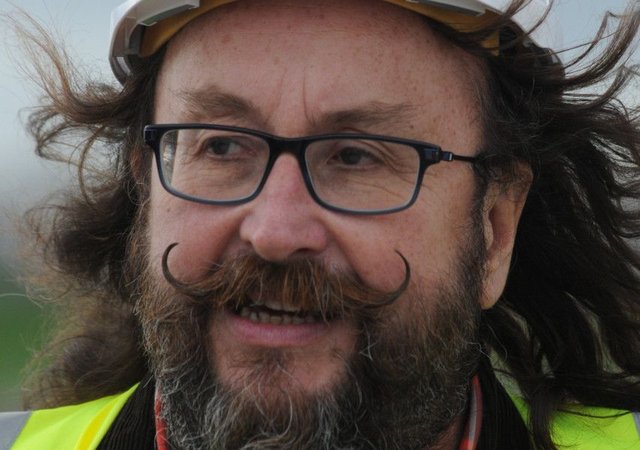 On 22nd July 2016, the television programme, 'The Hairy Builder with Dave Myers' was broadcast on BBC2. The programme showed Dave Myers (one of the two famous 'Hairy Biker' cooks ) helping builders restore parts of Pontefract Castle for future generations. On 22nd July 2016, the television programme, 'The Hairy Builder with Dave Myers' was broadcast on BBC2. The programme showed Dave Myers (one of the two famous 'Hairy Biker' cooks ) helping builders restore parts of Pontefract Castle for future generations. |
| 23/7/1215 | On 23rd July 1215 King John wrote a strongly-worded letter, from a council at Oxford, to the men of Yorkshire, covering all ranks (and by implication John de Lacy, lord of Pontefract), to hand back possessions they had seized from the king, by the 15th August; the same date that London was to be returned to the king. On the 16th July, at Oxford King John had demanded the restoration of his treasure from London plus the formal restoration of peace. The barons had sought to extend their power over institutions such as the Exchequer in addition to presenting further claims for restoration of lands from the king and intervening in the appointment of local officials to secure favourable terms. Unsurprisingly the council ended abruptly with the Barons leaving "with great rancour". |
| 23/7/1229 | On 23rd July 1229, John de Lacy, lord of Pontefract, was at the Northampton council convened by Henry III which agreed to muster an army and fleet at Portsmouth on 13th October to recover 'lost' lands in France. |
| 23/7/1326 | On 23rd July 1326, Henry of Lancaster, brother of the executed Thomas, Earl of Lancaster, and later to be lord of Pontefract when Edward III returned the earldom to him, was made Joint Commissioner of Array in the counties of Warwick, Leicester, Nottingham and Derby by Edward II. The king was now under enormous pressure to mobilise his defences against possible invasion by France or Roger Mortimer and his mistress, Queen Isabella. |
| 23/7/1483 | On 23rd July 1483, Richard III, lord of Sandal, wrote an agreement protecting the widow (Katherine Neville) and children of Lord Hastings who had been executed for treason the previous month. No attainder was issued meaning that his family kept their titles and land and Hastings’ brother, Ralph was pardoned on 2nd August. |
Last week in history
| Date | Event |
|---|---|
| 13/7/1322 | On 13th July 1322, Edward II sent the following order from York to Thomas Deyvill, Keeper of the Castle and Honour of Pontefract: ‘To Thomas Deyvill, keeper of the castle and honour of Pontefract, and of certain lands in the king’s hands beyond the water of Ouse, co. York. Order not to intermeddle further with the lands of Roger de Novo Mercato in Womersley, and to restore the issues thereof and Roger’s goods and chattels found there.’ |
| 13/7/1381 | On 13th July 1381, John of Gaunt, lord of Pontefract, was at Berwick on his way back to London from Edinburgh, recalled by a letter from Richard II after riots in the capital. Gaunt was also trying to meet up with his wife, Constance, who had fled the troubles and had been hiding at Knaresborough Castle. |
| 13/7/1397 | On 13th July 1397, Richard II, Pontefract Castle’s most famous prisoner, commanded Robert Leigh, Cheshire’s sheriff, to raise a force of 2,000 archers and ordered the sheriffs in London and every English county to proclaim that Thomas Woodstock, Duke of Gloucester, Richard Fitzalan, Earl of Arundel and Thomas Beauchamp, Earl of Warwick had been taken into custody ‘for the peace and safety of the people’. Any gatherings without royal permission were treasonous. |
| 13/7/1645 | On 13th July 1645, letters were received from Sandal Castle, which gave news of Marmaduke Langdale's approach. The Parliamentary forces had raised some fortifications near Ferrybridge, on Brotherton Marsh and some cannon were taken there to secure the pass. The Parliamentary forces had an alarm in the night and both horse and foot remained under arms till morning. About four o'clock, they were seen in the West Field drawn up as though ready for an attack. This was the direction in which Langdale had come before to relieve the castle and it was hoped that he was approaching. At this time, the plague prevailed in the town and, as a result of this, Parliament's General Poyntz withdrew his troops from the town and formed a camp in the West Field, where the general himself henceforth always slept. News that the Skipton horse had pushed through Wakefield and by Sandal in order to join Sir Marmaduke Langdale gave alarm to the Parliamentary forces. |
| 14/7/1364 | On 14th July 1364, John of Gaunt, by right of his wife Blanche (third cousin), became the new lord of Pontefract and received by royal charter a confirmation of all the privileges which his father-in-law, Henry of Grosmont, the 1st Duke of Lancaster, had had before him. |
| 14/7/1385 | On the 14th July 1385, Richard II visited Pontefract Castle, on his first military campaign as leader, to engage the invading Scots who, bolstered by a French army of 1,000 men-at-arms and 600 bowmen under General Jean de Vienne, were attacking northern England. He arrived at York on the 16th. John of Gaunt was preparing to meet Richard at Durham after assembling men and supplies from Pontefract. |
| 14/7/1399 | On 13th or 14th July 1399, Henry Bolingbroke reached Pontefract with an estimated sixty supporters, after landing at Ravenspur on the Humber estuary some two weeks before. As he progressed across Yorkshire, his followers increased with records showing thirty-seven knights and esquires and attendants joining him. At Doncaster, on the 16th of the month, he was similarly acclaimed by the Earl of Northumberland and his son, Henry 'Hotspur' who had become disillusioned with Richard II's administration of northern England. |
| 14/7/1503 | On 14th July 1503, Margaret Tudor, eldest daughter of Henry VII, arrived at Pontefract on her way from Richmond Palace to Scotland to meet her husband, James IV. The marriage had been completed by proxy on 25th January that year at Richmond Palace with the Earl of Bothwell as proxy for the Scottish king. She was met by deputations seven, four and two miles from Pontefract and escorted to the town to be received by its mayor, burgesses, inhabitants and ‘the abbot in pontifical and all the convent’. She left on the 15th for York. |
| 14/7/1645 | On 14th July 1645, Nathan Drake, Royalist diarist, recorded: ‘ …the enemy…sending out stronge p’ties of horse towards Dauncaster & to Sandoll………It was tould us also this evening by the enemyes owne Souldyers that there was 5 Souldyers buryed this day of the Plague: they dyed in the howses in the Barly markit place…’ |
| 14/7/1919 | 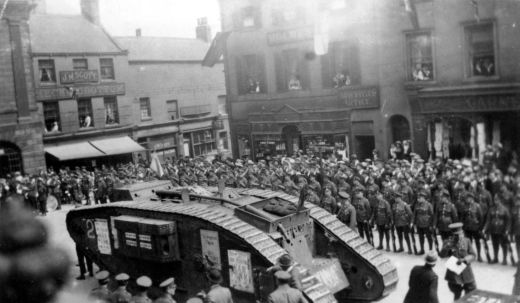 On 14th July 1919, a World War I tank (tank No. 289) was awarded to Pontefract by General Benson in recognition of the town’s having subscribed over £2m in War Loans: it was kept at the castle, being removed on 26th September 1934 to Nevison’s Leap and later cut up for salvage in World War II. On 14th July 1919, a World War I tank (tank No. 289) was awarded to Pontefract by General Benson in recognition of the town’s having subscribed over £2m in War Loans: it was kept at the castle, being removed on 26th September 1934 to Nevison’s Leap and later cut up for salvage in World War II.
|
| 15/7/1300 | In July 1300, Edward I successfully besieged Caerlaverock Castle on his latest Scottish campaign with Thomas, Earl of Lancaster and future lord of Pontefract, his brother, Henry, and their sixteen-years-old cousin, Edward of Caernarfon (future Edward II) in attendance. |
| 15/7/1483 | On 15th July 1483, Richard III, lord of Sandal, appointed the Duke of Buckingham as Lord High Constable of England, a higher rank than given to John Howard, Duke of Norfolk. Cornelius Aurelius, author of the early sixteenth-century account, ‘Divisiekroniek’, written in the Low Countries, claimed that Buckingham was responsible for the fate of Edward IV’s two sons, the noted ‘Princes in the Tower’. Aurelius claimed: ‘the Duke of Buckingham killed these children hoping to become king himself….he had read a prophecy about a future King Henry of England….and he believed himself to be this for he was called Henry. And some say..that this Henry…killed only one child and spared the other….and had him secretly abducted out of the country. This child was called Richard…..he came to Brabant to Lady Margaret his aunt…the widow of Duke Charles of Burgundy.’ |
| 15/7/1645 | On 15th July 1645, rumours of impending relief reached the Royalist castle and some of the garrison ventured into the orchard obtaining a considerable supply of apples. Two were killed and others wounded on this venture. In the afternoon, a drum was sent to the castle saying that General Goring and Langdale were routed, and that Cromwell, Fairfax and Rossiter were coming to the besiegers' assistance. The last hope of the garrison was now destroyed and they found themselves surrounded by enemies it was impossible to vanquish. |
| 15/7/1928 | On 15th July 1928, a parade and drum-head service was held in the grounds of Pontefract Castle attended by 1,000 members of the St John Ambulance Brigade from all parts of the West Riding. Brigadier-General C.R. Ingham Brooke led the proceedings. |
| 16/7/1361 | On 16th July 1361, Henry of Grosmont’s, 1st Duke of Lancaster and lord of Pontefract, lands were officially divided between his two daughters: Maud received the land south of the River Trent and Blanche those in the north where her husband, John of Gaunt was already Earl of Richmond. |
| 16/7/1369 | On 16th July 1369, John of Gaunt, lord of Pontefract, proceeded to Calais in readiness for a raid into Artois. Edward III could not follow Gaunt as Queen Philippa was ill, leaving Gaunt being shadowed by Charles V’s Normandy troops. Gaunt failed to take the port of Harfleur and assumed a stand-off with the Duke of Burgundy near Ardres with neither side risking a battle. |
| 16/7/1377 | On 16th July 1377, Richard II was crowned at Westminster Abbey in an abbreviated ceremony to reflect his young age and then carried to Westminster Hall for the coronation banquet. John of Gaunt, lord of Pontefract, presided as Lord Steward. Richard was to die at Pontefract Castle twenty-three years later. |
| 16/7/1645 | On 16th July 1645, Parliament's Colonel General Poyntz sent a letter to the governor of the castle, again summoning him to surrender the castle, and that if he did he might gain honourable terms. The honourable terms were to this effect “That whereas they had heretofore sent to summons the castle which was still rejected, but now taking into consideration the great care and love so many gentlemen soldiers in the castle, and the misery they lived in, the effusion of so much innocent blood which was likely to be made, and many a sackless man in it, they thought once more to summons them, and give them to understand that if they pleased to come to a treaty about surrendering the same they would treat them upon honourable terms with conditions fitting for such a garrison and would give hostages for the same" To this, the governor replied “That it was a matter of too great consequence to treat or give answer at first but he would confer with the knights and the gentlemen of the castle and return an answer as speedily as possible” |
| 16/7/1890 | On 16th July 1890, the second annual Pontefract tennis tournament, with five events, commenced in the grounds of the castle. |
| 17/7/1328 | The Chronicle of Lanercost records that on the 17th July 1328: The ‘young king [Edward III] gave his younger sister, my lady Joan of the Tower, in marriage to David, son of Robert de Brus, King of Scotland, he being then a boy five years old. All this was arranged by the king's mother the Queen [dowager] of England, who at that time governed the whole realm. The nuptials were solemnly celebrated at Berwick on Sunday next before the feast of S. Mary Magdalene. The King of England was not present at these nuptials, but the queen mother was there, with the king's brother and his elder sister and my lords the Bishops of Lincoln, Ely and Norwich, and the Earl of Warenne (owner of Sandal Castle) Sir Roger de Mortimer and other English barons, and much people, besides those of Scotland, who assembled in great numbers at those nuptials.’ |
| 17/7/1373 | On 17th July 1373, John of Gaunt, lord of Pontefract, landed at Calais with 6,000 men-at-arms and archers. With the assistance of Henry Percy, Earl of Northumberland, and the Duke of Brittany, the army marched towards Bordeaux hoping to engage with the French forces of Charles V in order to recover Aquitaine. On reaching Bordeaux, around December, the exhausted English army found a city devastated by famine and plague. Unanswered pleas, in January 1374, to Edward III for finance and reinforcements, compelled Gaunt to return to England. |
| 17/7/1394 | On 17th July 1394, seven weeks after the funerals of Mary de Bohun (his daughter-in-law)) and the earlier one of Constance of Castile (his wife), John of Gaunt held a meeting at Pontefract Castle along with: his brother, Edmund, Duke of York; his nephew, Edward, Earl of Rutland; and his brother Thomas, Duke of Gloucester. Probably, Henry Bolingbroke was also in attendance meaning that according to the entail of Edward III, the first, second, fourth and sixth in line to the throne were all present. A letter was sent to Richard II disclaiming any rumours of John of Gaunt plotting to obtain the crown for himself or his son. |
| 17/7/1645 | On 17th July 1645, Royalist Colonel Lowther sent a letter to Colonel General Poyntz that they were ready to discuss surrender as soon as the place and time was appointed. The besieging Parliamentary forces decided to take their time about discussions as they heard from a garrison captain that the castle had provisions for only 5 days or slightly more. The besiegers intended to starve out the garrison, then to strip the soldiers and pillage the castle. |
| 18/7/1317 | A meeting was arranged by Edward II to be held at Nottingham on 18th July 1317, regarding peace with the Scots, to which Thomas Earl of Lancaster, lord of Pontefract, and other magnates were summoned; but, as before, the Earl was absent. He excused himself as being unwell. Edward had accused the Earl of convoking illicit gatherings and of retaining very large numbers of men, thus disturbing the kingdom and frightening the people. Lancaster had denied this: he replied that he retained men only to uphold the King’s peace and lordship and he would come with his whole force to Newcastle on 11th August 1317 as he had been summoned to do. |
| 18/7/1484 | On 18th July 1484, after Richard III, lord of Sandal, had issued orders two months before to put the country on high alert because of murmurs of impending invasion by Henry Tudor, seditious rhymes were posted in prominent locations around London. One memorable and treasonous couplet pinned to the doors of St Paul’s ran: ‘The Cat, the Rat, and Lovell our Dog, Rule all England under a hog.’ The implications were clear: The Cat was Richard’s counsellor, William Catesby; the Rat being Sir Richard Ratcliffe, an influential figure in the northeast; Francis Lovell, Richard’s childhood friend and chamberlain; the hog, a scathing reference to Richard’s white boar emblem. |
| 18/7/1645 | On 18th July 1645, Nathan Drake, Royalist diarist, recorded: ‘This day, before 10 a Clock, Genrall Poynte Sent in a letter wth a Trumpitt to our Governor to give notise at what time and place the Treatye should beginner…..wch Trumpitt staid whilst servise was done in the hall & then tooke his answer backe…..they sett up a Tent in the Bottom Cloase under Baghill a little above Brode lane end wch they made Ready; and about 4 a ClockTheirs Genrall wth Collonell Ouerton & 9 offcers more Came wth him to the Barbican Gates where they met wth our Committies….The Committeyes for our p’ty was Sr Richard Hutton, Sr John Romsden, Sr George Wentworth, Leiutenant Collonell Gilbreth, and Mr Hirst….for them was MrWasthill, a lawyer, CollonellBright, Leiutenant Collonell Fairfax, and Leiutenant Collonell Copplay. They treated there….till about 9 a Clock, but Concluded upon Nothinge, but deferred it of till about 9 a Clock of the next day…….during that time Genrall Poyntes & Collonell Overton Came into the Tent & drunke wth them…’ |
| 19/7/1390 | On 19th July 1390, Henry Bolingbroke, the future Henry IV and son of John of Gaunt, lord of Pontefract, set sail from Boston in Lincolnshire to join the Teutonic Knights in Lithuania in a bid to convert the pagan Prussians to Christianity. Accompanying Henry were Thomas Swynford, Thomas Rempston, Hugh and John Waterton and their cousin Robert, hugh Herley (chaplain) and Sir Thomas Erpingham. |
| 19/7/1455 | On 19th July 1455, a statement was enrolled in Parliament claiming that Henry VI had ‘declared his beloved kinsmen (the Earls of Warwick and Salisbury and Richard, Duke of York, lord of Sandal Castle) to be his faithful lieges’ with a final demonstration of complete Yorkist control five days later at Westminster when all the lords assembled swore ‘to show the truth, faith and love which they have and bear to his highness’ |
| 19/7/1529 | On 19th July 1529, the ‘Beverley Sanctuary Register’ noted that Richard Dawson of Pontefract, a minstrel from the county of York, sought the liberty and protection of St John of Beverley for the murder of Brian Routch, lately of Skipton, also a minstrel. |
| 19/7/1645 | On 19th July 1645, Parliament's Colonel General Poyntz, Colonel Overton and nine officers came to the Barbican Gate and the committee from the castle (including Sir Richard Hutton, Sir Thomas Bland and Sir John Ramsden) went with them to a tent located at a close under Baghill, a little above Broad Lane End. At length, the committee of the besieged Royalist garrison declared that they were determined to fight it out rose and departed. The besieging Parliamentary forces hoped that an adjustment would be made the next day. |
Next week in history
| Date | Event |
|---|---|
| 1/8/1086 | It is believed that on 1st August 1086, Ilbert de Lacy, Lord of Pontefract, and possibly William de Warenne of Sandal, were at Old Sarum Castle, Wiltshire, on the orders of William the Conqueror who had instructed ‘all the landholding men of any account throughout England’ to swear an oath of allegiance to him as king. The site is also where returns for the Domesday survey were collated. |
| 1/8/1141 | On 1st August 1141 the Empress Matilda began to besiege the palatial castle of Bishop Henry of Winchester. The defenders threw burning material from the ramparts which began to set the whole city ablaze. At the same time, Queen Matilda (King Stephen's wife) was now approaching Winchester with an army of her own, which included William de Warenne, 3rd Earl of Surrey, and owner of Sandal Castle. Following the Empress Matilda's flight from Winchester, William de Warenne would capture Robert, Duke of Gloucester - Matilda's half- brother - which would prove very useful as a bargaining agent in obtaining the release of King Stephen, who had been captured at the Battle of Lincoln, earlier that year. |
| 1/8/1242 | In August 1242, Edmund de Lacy, later lord of Pontefract, and John de Warenne, heir to the earldom of Surrey and Sandal Castle, both in royal custody due to the ‘premature’ deaths of their fathers, were granted a gift of two deer by Henry III. This was indicative of their esteem within the royal household. |
| 1/8/1485 | On 1st August 1485, Lord Strange, son and heir of Thomas, Lord Stanley, arrived at court in Nottingham. Lord Strange’s attendance was regarded as surety by Richard III, lord of Sandal, for his father’s leaving the royal household and returning to his Lancashire base at Lathom. Albeit Stanley had shown his loyalty to Richard in the tumultuous events of 1483 and had kept his wife, Margaret Beaufort, under house arrest, the king did not entirely trust him. |
| 1/8/1513 | By 1st August 1513, an English army of Henry VIII, under Thomas Howard, the Earl of Surrey, had arrived at Pontefract Castle setting up camp and recruiting additional troops prior to the impending Battle of Flodden Field on 9th September against James IV of Scotland. Surrey had sent Sir William Bullmer to round up a troop of mounted archers to patrol the border region. On 3rd August, Bullmer’s one thousand archers ambushed a Scots’ raiding party at Millfield of between seven to eight thousand men, led by the Earl of Home, sustaining only sixty men lost to the Scots’ five hundred slain and four hundred taken prisoner. James IV was killed at Flodden Field (the last monarch from the British Isles to die in battle) along with eleven to twelve thousand of his compatriots with twelve hundred captured in less than two hours. The English lost about four thousand men with 120 taken prisoner. |
| 1/8/1797 | In summer 1797, (most probably late July, early August), Joseph Mallord William Turner sketched ‘Pontefract: The South Side of All Saints’ Church, with the Porch and South Transept 1797’ during his stay in Yorkshire as a guest of landowner Walter Ramsden Fawkes at Otley. The church, in the shadow of Pontefract castle, had been severely damaged in 1645 (its Tower being used as a lookout), hit by cannonballs. |
| 1/8/2019 | The Key to the North project was completed in 2019 and, on Yorkshire Day that year, Historic England announced to a crowd of castle visitors that it would be removing the castle from its Heritage At Risk register where it had been listed since 2003. This was one of the key aims of the project. The £5 million project, which included a new visitor centre, extensive conservation of the monument, a viewing platform, new paths and a bandstand, was funded by the National Lottery Heritage Fund, Historic England, the Council, the Wolfson Foundation and landfill charity EpaC. |
| 2/8/1086 | Around August 1086 in the Domesday Book of that year, Tanshelf or Tatessella (along with Kirkby representing modern day Pontefract) was recorded as having a priest, 60 petty burgesses, 16 cottagers, 16 villagers and 8 smallholders, a church, a fishery and three mills. Its nominal population of 101, recording only landholders, was probably four to five times larger when family members were included. |
| 2/8/1819 | On 2nd August 1819, Thomas Armitage an American clergyman was born at Pontefract. He died on January 21st 1896. He was an important influence in the Baptist Church in New York City, and the prime mover in the establishment of the American Bible Union in 1850 being president of that body from 1856 to 1875. Among his works were’ Jesus, His Self- Introspection’ and ‘History of the Baptists' (1887). |
| 2/8/1950 | On 2nd August 1950, the Duchy of Lancaster informed Pontefract Corporation that it was granting a new lease for Pontefract Castle for thirty-one years at a rent of £3 pa (£105 in today's money) subject to the guardianship of the ruins being passed to the Ministry of Works. |
| 27/7/1380 | On 27th July 1380, Richard II granted Mary de Bohun’s marriage to John of Gaunt’s (lord of Pontefract) son, Henry of Lancaster for 5,000 marks (£2.5 million today). Gaunt was excused this sum as he was owed at least as much for his war ‘expenses’. The marriage would take place seven months later. |
| 27/7/1447 | On the 27th July 1447, Richard Duke of York, owner of Sandal castle, was appointed Lord Lieutenant of Ireland for a term of ten years. The length of this appointment was twice as long as would be normal and would keep Richard well away from the court of Henry VI for a prolonged period. However, it is also true to say that the appointment did provide Richard with some stability whilst offering the English-controlled parts of Ireland the same long-term certainty. York would not leave for Ireland however for nearly another two years. |
| 27/7/1476 | On 27th July 1476, the Fotheringhay Procession of Richard, Duke of York’s corpse, passed through Grantham on its way from the Priory at Pontefract, led by Edward IV. A later historian making notes on Grantham and its church, recorded: ‘His coffin lay on a funeral car drawn by seven horses, the figure of an angel robed in white, stood at the foot of the bier, bearing in his hand a crown, to signify that had he lived he would have reigned……His widow held the Lordship of Grantham and its Soke, and owned the George hostelry as her private property, which she left in remainder to Fotheringhay Priory, her husband and her own burial place. She may have joined the funeral procession from her house, the George…’ |
| 27/7/2020 | On 27th July 2020, DigVentures returned to Pontefract Castle in a three-weeks' archaeological dig to finish excavating the drawbridge pit that they had unearthed in 2019. Funded by Historic England, the project was an opportunity to carry out further investigation of the gatehouse following the unexpected discovery of the remains of a barbican and drawbridge pit during the Key to the North project in 2016. Wakefield Council was supported and advised on the excavations by Historic England and the West Yorkshire Archaeology Advisory Service (WYAAS).The excavations revealed some interesting masons' marks and artefacts that helped to date the gatehouse as well as an 8m deep drawbridge pit. |
| 28/7/1338 | On 28th July 1338, Robert de Bosevill, Constable of Pontefract Castle, was appointed as king’s justice in the commission in the West Riding in the county of Yorkshire. |
| 28/7/1484 | On 28th July 1484, whilst staying at Pontefract Castle between the 23rd and the 29th of that month, Richard III granted a charter to the borough under the seal of the Duchy of Lancaster. The government of the town was vested in thirteen comburgesses chosen for life from among 'the more creditable sort of men' who annually were to elect one of their number as mayor. The original comburgesses were elected at Michaelmas (29th September) 1484. |
| 28/7/1540 | On 28th July 1540, Catherine Howard married Henry VIII, nineteen days after Anne of Cleves' marriage was annulled and on the same day as the execution of Thomas Cromwell for high treason. Catherine was first cousin to Anne Boleyn and had been a lady-in-waiting to Anne of Cleves. Later in the marriage, Henry found out about Catherine's purported infidelity while the court was staying at Pontefract Castle. |
| 28/7/1645 | On 28th July 1645, Pontefract was mentioned in Parliament when papers and letters taken at the castle were referred to the Committee for the King's Cabinet letters. |
| 28/7/1884 | On 28th July 1884, Pontefract Castle was officially re-opened to the public following extensive renovation works to coincide with the 400th anniversary of the town's incorporation as a municipality under the charter of Richard III. |
| 29/7/1483 | On 29th July 1483, Richard III, lord of Sandal, had, according to Thomas More (drawing on information from Bishop Morton) writing his ‘History of King Richard III’ more than thirty years later, ordered the deaths of his nephews, the fabled Princes in the Tower. Richard headed from London on this date on his royal progress of the North. Richard wrote to his Chancellor, John Russell, from Minster Lovell, on this date: ‘..we understand that certain persons of such as of late had taken upon them the fact of an enterprise, as we doubt not ye have heard, be attached and in ward.’ The ‘enterprise’ some have claimed was part of a Woodville-inspired coup to free the boys from the Tower. More claimed that the Duke of Buckingham, who had, up to this point, been a staunch ‘Ricardian', was so upset by the king’s orders that he rebelled not long afterwards. More’s account had Sir James Tyrell, Richard’s servant, commit their murders; based on a supposed confession by Tyrell in 1502. |
| 29/7/1772 | On 29th July 1772, around noon, John Wesley opened a meeting room in Pontefract which had been established by his followers. Castle Chain House was taken by John Shepherd, partly as his accommodation and for use by travelling preachers with the rest used as a place of worship. The first Methodist chapel was built in Pontefract in 1789 and, in 1796, the town was made the head of a considerable circuit of twenty-four preaching places with two stationed preachers, covering an area from Barnsdale to Wetherby. |
| 30/7/1447 | On 30th July 1447, Richard Duke of York and lord of Sandal Castle, was appointed Lieutenant of Ireland for ten years on a fee of 4,000 marks (£3.05 million in today’s money), followed by an annual salary of 2,000 marks. |
| 30/7/1447 | On 30th July 1447, a nearly eight-years-old Anne Plantagenet, first child of Richard, Duke of York and lord of Sandal Castle, married seventeen-years-old Henry Holland, (later Earl of Exeter). Holland was to prove a thorn-in-the-side for York as he remained loyal to Henry VI and was a commander at the Battle of Wakefield in 1460 at which York perished. |
| 30/7/1476 | On 30th July 1476, the funeral services for Richard, Duke of York’s (former lord of Sandal Castle) re-interment at Fotheringhay along with his son, Edmund, were held at St Mary and All Saints Church. After Masses and sermons, ritual offerings of pieces of gold cloth were made. York’s black warhorse, still alive sixteen years after his death, was ridden into the church by Lord Ferrers carrying an axe with the blade facing downwards. York was buried in the choir and Edmund in the lady chapel. A huge feast followed with reportedly up to 20,000 present. York’s widow, Cecily, apparently was absent for an unknown reason. |
| 30/7/1902 | On 30th July 1902, Hansard’s Parliamentary Debates recorded: ‘ Mohill Union (County Leitrim, Ireland) – Paupers sent from Pontefract to Mohill, Withdrawal of Grant of Five Shillings Outdoor Relief by the Pontefract Guardians.’ |
| 31/7/1648 | On 31st July 1648, the Proceedings of the Committee of both Houses of Parliament at Derby House recorded: ‘The same to Sir Henry Cholmeley. We are informed that the (enemy’s) garrison of (Royalist) Pontefract make incursions far into the surrounding country for spoil and plunder, and that many who thought themselves secured by our forces employed in blocking it up are taken and made prisoner by that garrison. We desire you to improve, with your best care and diligence, all the forces there under your command in order to straiten the enemy and secure our people in the parts adjacent from the danger of their incursions.’ |