This Coming Week In History
This week in history
| Date | Event |
|---|---|
| 9/10/1483 | Around 9th or 10th October 1483, Richard III, on hearing news of southern discontent, hurriedly left Pontefract to reach Lincoln, via Gainsborough, on his return south. It was here that he heard of Henry Stafford’s, Duke of Buckingham, intention to rebel, possibly because of the delay in his gaining access to the de Bohun inheritance. On the 12th October, Richard wrote to the Chancellor, John Russell, requesting the Great Seal be sent to him immediately. |
| 9/10/1536 | On 9th October 1536, Henry VIII received Lord Darcy’s letters from Pontefract warning of impending religious revolt but replied to Darcy that he was confident there was no danger and instructed him to arrest fugitives and anyone spreading rumours. |
| 9/10/1648 | On 9th October 1648, Parliamentary troops, under Sir Henry Cholmley, (JP for the West Riding of Yorkshire, commissioner for the militia in Yorkshire and colonel of foot in the Parliamentary army) entered Pontefract, having previously occupied the villages of Ackworth, Featherstone and Ferrybridge. |
| 10/10/1326 | On 10th October 1326, Edward II and Hugh Despenser the Younger, had reached Gloucester from the Tower of London attempting to reach the safety of Despenser’s strongholds in south Wales. They were fleeing from Queen Isabella’s and her lover Roger Mortimer’s, invasion from Dordrecht, aided by mercenaries from the Low Countries and Germany, soldiers from the Count of Hainault and financial guarantees by the king of France. Unfortunately, for Edward, news came that Thomas of Lancaster’s (lord of Pontefract) brother, Henry who had not supported his brother’s revolt four years earlier and had been allowed to inherit some of his estates, now had turned to Isabella’s cause. |
| 10/10/1361 | On 10th October 1361, John of Gaunt, lord of Pontefract, attended the marriage of his brother, the Black Prince, to Joan, Countess of Kent, at Windsor; the Pope had given his assent to the union as Edward and Joan were related in the second and third degree. |
| 10/10/1459 | On the 10th October 1459, Richard Duke of York - owner of Sandal Castle - along with the earl's of Salisbury and Warwick, sent a desperate letter to King Henry VI pledging their loyalty. The Yorkist forces had arrived at Ludford Meadow just outside of Ludlow following news from scouts that a royal army, headed by the king himself, and perhaps twice the size of York's forces, was heading to meet them. There was a real sense of panic in the earl's letter stating that they only sought to end 'such inconvenient and irreverent jeopardies as we have been put in diverse times herebofore'. York would state that they only kept 'such fellowship' (referring to the thousands of men they had with them) for their protection and that they would willingly come to the king's presence, if he would grant them safe conduct. However, at the end of the letter, York does seem to take aim directly at Queen Margaret as he recounts to King Henry 'the opportune impatience and violence of such persons as intend of extreme malice to proceed under the shadow of your high might and presence to our destruction'. The letter as a whole had a different resonance to other Yorkist communications and looks to appeal to henry's lifelong love of peace. The change of tone is understandable as they were in a no-win situation. If they fought they would commit treason and risk their lives and inheritance of themselves and their heirs. If they ran, they might save their lives but still lose their lands and inheritance. |
| 10/10/1460 | On 10th October 1460, after the Lancastrians’ defeat at the Battle of Northampton three months earlier, Richard, Duke of York’s (lord of Sandal Castle) armed escort of 800 mounted men stopped at the gates of Westminster Palace and York dismounted with a sword held aloft before him. York approached the empty royal throne in the Painted Chamber and placed his hand upon it awaiting affirmation of his claim to kingship but was met with stunned silence as the assembled lords had no wish to depose an anointed king. |
| 10/10/1536 | On 10th October 1536, the Archbishop of York, Edward Lee, fearing that he was about to be abducted by rebellious ‘commons’ from the Marshland in the West Riding of Yorkshire in the impending rising (as it was to be called) Pilgrimage of Grace, fled to Pontefract Castle with thirty servants to join Dr Magnus from York and Lord Darcy. On this day also, Darcy wrote to the Lord Mayor of York informing him that the commons of the East Riding were likely to invade York and seize the king’s treasure. |
| 11/10/1159 | On 11th October 1159, William of Blois, 4th Earl of Surrey, died. William had taken ownership of Sandal Castle in 1148. William's parents were Stephen, Count of Boulogne, and Matilda Contessa de Boulogne. William had been born circa 1137 but did not want to be king, so his father Stephen acknowledged his cousin Matilda’s son, Henry, as his successor. The two centuries between the death of William of Blois in 1159 and the last Earl of Surrey in 1347 mark the period when the timber castle at Sandal was reconstructed in stone and received its full complement of buildings, which lasted until their destruction in the Civil War. |
| 11/10/1370 | On 11th October 1370, the ailing Black Prince appointed his brother, John of Gaunt, Duke of Lancaster and lord of Pontefract, as his lieutenant in Aquitaine after Gaunt had participated in the siege of Limoges even engaging in hand-to-hand fighting in the undermining tunnels. The Black Prince then returned to England leaving his brother in charge. |
| 11/10/1483 | On 11th October 1483, Richard III, lord of Sandal, was made aware of the Duke of Buckingham’s participation in plots and rebellions that were breaking out. Buckingham had been a trusted and loyal adviser to Richard, being with him at the arrest of Anthony Woodville and instrumental in Richard’s gaining the throne. He had been appointed Chief Justice over Wales and two months before had been commissioned to investigate treasons in London. His role in the so-called murder (or spiriting away) of the Princes in the Tower has been much debated over the centuries with claims of acting at Richard’s command, selfishly seeking the crown himself, or even pursuing Edward V’s ‘rightful’ inheritance, all put forward. A possible motivation for his rebellion is cited as Edward IV’s keeping of thirty-eight manors on Henry Bohun’s death which Buckingham regarded as his inheritance. Buckingham was executed for treason on 2nd November 1483. |
| 11/10/1536 | On 11th October 1536, having received Sir Brian Hastings’ letter from Hatfield advising Lord Darcy, in Pontefract, to send a force immediately to York ‘ to overawe their faction in that city’ (rebels from Howdenshire and Marshland intending to march on York in the Pilgrimage of Grace), Darcy replied: ‘I am putting all the gentlemen within my room in readiness at an hour’s warning, when I shall know the King’s pleasure…If you have any certainty from above let me share it’. |
| 11/10/1619 | A manuscript dated 11th October 1619 declared: ‘ Out of Queen Anne her Joynture. The King (James I) granted &c. and all o’r mann’r of Pontefract in the county of Yorke & other counties wheresoever that hon’r extendeth……..’ A jointure was an estate settled on a wife for the period during which she survived her husband, in lien of a dower. Anne had died in March of that year. |
| 12/10/1460 | On 12th October 1460, an eight-years-old Richard (son of Richard, Duke of York, lord of Sandal Castle) and his older siblings Margaret and George were at Sir John Fastolf’s home in Southwark awaiting their father. They had been there for four weeks, visited regularly by their elder brother, Edward, Earl of March, as their mother, Cecily, Duchess of York, had left to join her husband on his grand entry into London. |
| 12/10/1462 | On 12th October 1462, a ten-years-old Richard, brother of Edward IV, Duke of Gloucester and steward of the Duchy of Lancaster north of Trent with official residence at Pontefract Castle, was appointed Admiral of England, Ireland and Aquitaine. Two months previously, in order to support his status, Richard had been given the castle of Gloucester, the constableship of Corfe Castle, the manor of Kingston Lacy and lordship of Richmond (soon to be transferred to his brother George). Around this time, Richard was also given property from the Duchy of Lancaster valued at £1000 a year (£1 million in today’s money) to provide a suitable income. |
| 13/10/1225 | On 13th October 1225, William de Warenne , 5th Earl of Surrey and owner of Sandal Castle, married Maud Marshall, with whom he would have a son, John. Throughout his life, William was a strong supporter of King John, and it was only in 1216 when he had been appointed as Warden of the Cinque Ports did he briefly desert John and supported Louis of France. However, within a year, he would be a committed supporter of Henry III. William had taken ownership of Sandal Castle in 1202, being the son of Hamelin de Plantagenet and Isabel. |
| 13/10/1272 | On 13th October 1272, Henry de Lacy, lord of Pontefract, was knighted at Westminster and confirmed as Earl of Lincoln: his minority was now officially at an end. Henry had received formal relief for his mother and himself for payments due for wardship of his lands in February 1272 having paid £335 (£342,000 in today's money) to the keeper of the works at Westminster. |
| 13/10/1289 | On 13th October 1289, Sir Henry de Lacy, lord of Pontefract, was given the role of one of the commissioners investigating alleged abuses of royal officials during Edward I’s three years’ absence on the continent. |
| 13/10/1321 | On 13th October 1321, Queen Isabella had wanted to stay at Leeds Castle in Kent while travelling to Canterbury, but was refused entry by the owner’s wife. The owner of the castle, who was not there at the time, was Lord Badlesmere, a supporter of Thomas of Lancaster, lord of Pontefract. When Isabella's men tried to gain access to the castle, some of them were killed. On hearing of the problem, Edward II took an army to the castle. Several of the Marcher Lords began to march into England in support of Lord Badlesmere. On 27th October, the Marchers and Badlesmere assembled at Kingston in order to raise the siege of Leeds Castle. Lancaster forbade them to help and wrote to the King to ask him to stop persecuting his liege men. At the same time, the Marchers wrote to the king asking him to abandon the siege, promising to surrender the castle to him at the next parliament. However, Edward seeing that the castle could not resist much longer, refused to consider the request, and after a few days Leeds was taken, to be followed by Badlesmere’s other Kentish castles. The Marchers meanwhile returned to Lancaster at Pontefract. |
| 13/10/1398 | On 13th October 1398, Henry Bolingbroke, Duke of Hereford, the son of John of Gaunt, lord of Pontefract, left Dover for Calais after saying final farewells to his father. Bolingbroke had been exiled for six years by Richard II for his ‘unsettled’ quarrel with Thomas Mowbray, Duke of Norfolk, the memory of his part in the Lords Appellants’ rebellion, and the king’s perception of him as a political threat. After Gaunt’s death the following year, Bolingbroke’s exile was made for life by Richard II. |
| 13/10/1399 | On 13th October 1399, Henry IV was crowned at Westminster Abbey on the feast day of Edward the Confessor. Pontefract Castle would be a major part of his northern estates |
| 13/10/1459 | On 13th October 1459, Richard, Duke of York (lord of Sandal Castle), fled from the site of the impending Battle of Ludford Bridge with his second son, Edmund, Earl of Rutland through Wales, eventually reaching Ireland. York’s eldest son, Edward, Earl of March, along with the Earls of Warwick and Salisbury and the rest of the Yorkist army made for Devon. Despite York’s forces having fired on Henry VI’s encampment the previous night, York telling his men that Henry was dead and, therefore, these actions were not treasonable, York’s supporters from the Calais garrison defected to the king during the night claiming they had been deceived. |
| 13/10/1472 | On 13th October 1472, at Pontefract, Richard, Duke of Gloucester, sent a letter to Sir William Plumpton concerning cattle stealing: 'R: Glocestre. Right trustie and welbeloued, we grete you well and whearas att the freshe pursuit of our welbeloued Christopher Stansfeild, one Richard of the Burgh that had take and led away feloniously certaine ky and othe cattell belonging to him, was take and arested with(in) the said manor att Spofford, wheras they yett remaine. Wheafore we desire & pray you that vpon sufficient suerty found […] by the said Christopher to sue against the said felon, as the law will for that offence, ye will make deliuery vnto him of the said cattell, as is according with right showing him your good aide, favour and benevolence,the rather att the instaunce of this our letters. And our Lord preserue you. From Pontefrett vnder our signett, the thirtenth of October. Endorsed: To our right trustie & wellbeloued Sir William Plompton knight, stuard of the lordshipp of Spofford, and to the bailife of the same, and to ether of them the duke of Glocester, constabl and admirall of England.' |
| 13/10/1536 | On 13th October 1536, with the remaining Lincolnshire insurgents (precursor to the Pilgrimage of Grace) having dispersed, the Earl of Shrewsbury wrote to Lord Darcy in Pontefract stating that the rebels ‘now mind themselves to be the King’s true and faithful subjects at all times and from time to time accordingly’ and as they would give no further help to the Yorkshiremen (even stopping boats on the Humber, Ouse and Trent so ‘that none shall come over but be glad to return homewards like fools’), he trusted any disturbances near Darcy would cease. On the same day, Darcy wrote to the king expecting the rebels to encounter him shortly but ‘there was not one gun in Pontefract Castle ready to shoot. There is no powder, arrows and bows are few and bad, money and gunners none, the well, the bridge, houses of office etc for defence, much out of frame’. |
| 14/10/1066 | On 14th October 1066, at the Battle of Hastings, Ilbert de Lacy fought alongside William the Conqueror. Ilbert was later granted lands by King William (under the overlordship of Bishop Odo of Bayeux, half-brother of William), for his part in the conquest. When Odo was banished from England by William II in 1088, Ilbert held his lands in Lincolnshire, Oxfordshire and Surrey as tenant-in-chief, direct of the king. The castle he built at Pontefract was enclosed in a park 8 miles in circumference. After the conquest, Ilbert received over 150 manors in the west of Yorkshire including; Penistone, Thurlstone, Denby, Scissett, Skelmanthorpe, Clayton, Cawthorne, Silkstone, Chevet, Crofton, Snydale, Whitwood, Heath, Altofts, Newlands, Carlton, Methley, East Ardsley, Lofthouse, Middleton, Morley, Batley, Southowram, Elland, Greetland, Heckmondwike, Mirfield, Nether Midgley, Over Midgley, Middleton, Thornhill, Kirkheaton, Highburton [Birton], Deighton, Fixby, Bradley, Huddersfield, Almondbury, Honley and Thong and 10 in Nottinghamshire and 4 in Lincolnshire. |
| 14/10/1066 | On 14th October 1066, the Battle of Hastings was fought between William of Normandy and King Harold. One of William’s most trusted advisers and supporters who fought by his side at Hastings was William de Warenne, the son of Ralph de Warenne and Emma. William, like the de Lacy family at Pontefract, was granted land in recognition of his support. It is possible that the first castle to be built on the newly acquired manor of Wakefield was on Lowe Hill in the now Thornes Park, on the north bank of the Calder. This was a weaker defensive position than the now Sandal Castle. It would have been a timber castle built on a mound 30 feet high without any bailey, now visible. It would have provided a small defensive enclosure whilst the new lord surveyed his lands. This area was excavated in 1953 but provided no dating evidence, and therefore it could have been an 11th century royal castle of modest proportions, or a 12th century castle initially for the lord, but subsequently for a constable, when the castle at Sandal, south of the Calder, was being built. |
| 14/10/1313 | On 14th October 1313, Thomas of Lancaster, lord of Pontefract, was one of the great lords of England who knelt before Edward II in Westminster Hall to receive his grace and pardon for his/their part in Piers Gaveston’s death. |
| 14/10/1399 | On 14th October 1399, the day after Henry IV was crowned king, the Duchy of Lancaster merged with the Crown. Henry decreed that the Lancastrian inheritance should be held separately from other Crown possessions and descend to male heirs (this separation being confirmed by Edward IV in 1461). Pontefract Castle had been incorporated into the Duchy in 1311. |
| 14/10/1663 | On 14th October 1663, Colonel John Frescheville wrote to the Marquis of Newcastle after the Stuart restoration: ‘I am commanded by my Lord Duke of Buckingham to give your Lordship this intelligence, that his Grace is now at Pomfrett, with 1500 foot, and 500 horse, which consists of trained bands and volunteers, all but the two troops under my command. Sir George Savill, and the rest of the most considerable persons of this country are here, and the confirmed intelligence both from the west and north of Yorkshire gives assurance that a party of rebels are drawing together, and Skipton is one place of their ren- dezvous, and North Allerton another….’ |
| 14/10/1871 | On 14th October 1871, the Leeds Times reported that “portions of Pontefract Castle are now being restored in the Tudor style of architecture, by order of the Duchy”. |
| 15/10/1313 | On 15th October 1313, Thomas of Lancaster, lord of Pontefract, dined with his cousin, Edward II, in a display of new-found harmony after many years of conflict surrounding the king’s rule and his court favourite, Piers Gaveston. Queen Isabella and the Earl of Gloucester, Gaveston’s brother-in-law, had been instrumental in this putative reconciliation. |
| 15/10/1328 | On 15th October 1328, Henry, 3rd Earl of Lancaster’s (brother of the executed Thomas of Lancaster, and restored to the earldom and control of Pontefract Castle) men murder their lord’s rival, Sir Robert Holland, at Borehamwood just as the king was sending him orders to raise troops against Lancaster. Their ‘gift’ to Lancaster was Holland’s head. |
| 15/10/1484 | In October 1484, in addition to erecting a new well tower that year, Richard III ordered John Woderobe, the receiver of rents, to have a bakehouse and brewhouse built within Sandal Castle. This new building would serve the household and garrison. The letter read: "John Woderof: A comaundement to John Woderoffe Receivor of Wakefeld to cause a bakehouse and a brewhouse to be bilded within the Castelle of Sandelle by the advise of Therle of Lincolne and other the king's Counselle lieng there and of the Revenues of his office to pay for the same at the king's charges." |
| 15/10/1536 | On 15th October 1536, the gentlemen in Pontefract Castle wrote to the Earl of Shrewsbury and other lords at Nottingham stating that following their advice of the 13th, they were ‘lying still’, doubting very much if they could safely venture out as the commons before York numbered 20,000 men and the whole county seemed in turmoil during the Pilgrimage of Grace. They expected the rebels to reach Pontefract on the 17th October and as the king had ignored their letters concerning the weakness of the castle, urgent help was needed. They begged that the Yorkshire rebels were offered the same conciliatory terms as those in Lincolnshire. |
| 15/10/1645 | On 15th October 1645, the King sent his forces, under Marmaduke Langdale and Lord Digby, to join Royalists from Scotland. They went to cross at Ferrybridge and encountered the Parliamentarian forces sallying forth from Pontefract Castle. |
Last week in history
| Date | Event |
|---|---|
| 5/10/1190 | On 5th October 1190 (some sources have the 11th), John fitz Richard, eldest son and heir of Richard fitz Eustace and Albreda de Lisours and first cousin once removed of Robert de Lacy, was killed at Tyre in the Holy Land on the Third Crusade led by Richard I. His son, Roger fitz John/de Lacy inherited the Pontefract fee. |
| 5/10/1318 | The wardrobe account for 1318-19, gives the names, seven hundred and fifty in all, of those to whom Thomas, Earl of Lancaster, lord of Pontefract, sent letters during the year. Especially large numbers of letters were issued between 5th and 8th October 1318, presumably to summon his followers to attend him at the parliament which had been called for 20th October at York. The on-going ill-feelings between the king and Lancaster made both parties extremely wary of the other. On this occasion, Lancaster wrote to twenty-five knights who were members of his retinue. Counting the different knights who received various letters, the maximum number of knights that can be shown to have served him during the year was forty two. |
| 5/10/1536 | On 5th October 1536, Lord Thomas Darcy sent his son, Sir Arthur to Henry VIII warning of risings in Northumberland, Dent, Sedbergh and Wensleydale and that ‘greater rebellions were to be feared’ in the impending (as it was to be called) Pilgrimage of Grace. He left his family seat at Templehurst (near Selby) for Pontefract Castle finding, on his arrival, that fewer than one third of its 300-strong garrison could be trusted as many favoured the rebels. |
| 5/10/1671 | On 5th October 1671, an order of sessions fixed the fees payable to the gaoler by the prisoners (debtors) kept at Pontefract Castle’s Main Guard (outside the present main entrance) according to their status: Knight, Esquire, Yeoman or Artificer. The Main Guard was, a century later from 1763, used as a place of detention for French prisoners of war. |
| 6/10/1319 | After Edward II’s retreat from the siege of Berwick, York was reached on 5th October 1319 and on the following day the king wrote to Thomas, Earl of Lancaster, by this time probably at Pontefract again. The crushing English defeat at the Battle of Myton the previous month had shown too clearly the need for an urgent overhaul of the country’s defence system, and this was the main subject discussed at a council meeting on 13th October. |
| 6/10/1536 | On 6th October 1536, Lord Thomas Darcy wrote to Henry VIII for guns and powder in order to defend the garrison at Pontefract. Darcy’s efforts to provision the castle were being hampered by lukewarm local support and the king himself had little money or arms to spare being preoccupied with Robert Aske’s Lincolnshire rebellion against the establishment of the Church of England, dissolution of the monasteries and other Crown policies closely identified with Thomas Cromwell. . |
| 7/10/1282 | On 7th October 1282, Sir Henry de Lacy, lord of Pontefract, was with Edward I at Rhuddlan witnessing a grant of land to John de Warenne, Earl of Surrey and owner of Sandal Castle. |
| 7/10/1322 | On 7th October 1322, The Register of William Melton, Archbishop of York, noted the prohibition of the worship of the executed (at Pontefract in March of that year) Thomas, Earl of Lancaster: ‘…… none shall come publicquely through veneration or devotion to the Tombe of Thomas, late Earl of Lancaster at Pontefract”. |
| 7/10/1323 | On 7th October 1323, William Melton, Archbishop of York, mandated the Archdeacon of York to prevent any veneration of Thomas of Lancaster (executed at Pontefract the previous year) as a saint, pointing out that this had not been sanctioned by the Apostolic See. |
| 7/10/1745 | On 7th October 1745, Lady Sophia Fermor, the second daughter of Thomas, 1st Earl of Pontefract died of fever aged twenty-four a few weeks after the birth of her daughter. Sophia was reputedly the author of ‘Woman Not Inferior to Man’, a radical text proclaiming the rights of women including quotes: 'I think it evidently appears, that there is no science, office, or dignity, which Women have not an equal right to share in with the Men: Since there can be no superiority, but that of brutal strength, shewn in the latter, to entitle them to engross all power and prerogative to themselves: nor any incapacity proved in the former, to disqualify them of their right, but what is owing to the unjust oppression of the Men, and might be easily removed…………. We must be at least as well qualified as [Men] to teach the sciences; and if we are not seen in university chairs, it cannot be attributed to our want of capacity to fill them, but to that violence with which the Men support their unjust intrusion into our places………. And as our sex, when it applies to learning, may be said at least to keep pace with the Men, so are they more to be esteem'd for their learning than the latter: Since they are under a necessity of surmounting the softness they were educated in (...) to which cruel custom seem'd to condemn them; to overcome the external impediments in their way to study; and to conquer the disadvantageous notions, which the vulgar of both sexes entertain of learning in Women. (...) it is self-evident, that many of our sex have far outstript the Men. Why then are we not as fit to learn and teach the sciences, at least to our own sex, as they fancy themselves to be?' |
| 8/10/1472 | On 8th (or 9th) October 1472, at Pontefract, Richard, Duke of Gloucester, ordered the arrest of Thomas Farnell for the murder of Katherine Williamson’s husband. |
| 8/10/1536 | On 8th October 1536, Lord Darcy wrote to his son from Pontefract Castle urging him to go rapidly to the king requesting that his son be allowed to help his father (Darcy was nearly seventy-years-old at the time) and, again, warning Henry VIII that Yorkshire was now on the point of rebellion against the king’s religious, political and economic policies. The king’s letters summoning the northern counties to send help to George Talbot, 4th Earl of Shrewsbury, were received at Pontefract this day. |
| 9/10/1483 | Around 9th or 10th October 1483, Richard III, on hearing news of southern discontent, hurriedly left Pontefract to reach Lincoln, via Gainsborough, on his return south. It was here that he heard of Henry Stafford’s, Duke of Buckingham, intention to rebel, possibly because of the delay in his gaining access to the de Bohun inheritance. On the 12th October, Richard wrote to the Chancellor, John Russell, requesting the Great Seal be sent to him immediately. |
| 9/10/1536 | On 9th October 1536, Henry VIII received Lord Darcy’s letters from Pontefract warning of impending religious revolt but replied to Darcy that he was confident there was no danger and instructed him to arrest fugitives and anyone spreading rumours. |
| 9/10/1648 | On 9th October 1648, Parliamentary troops, under Sir Henry Cholmley, (JP for the West Riding of Yorkshire, commissioner for the militia in Yorkshire and colonel of foot in the Parliamentary army) entered Pontefract, having previously occupied the villages of Ackworth, Featherstone and Ferrybridge. |
| 10/10/1326 | On 10th October 1326, Edward II and Hugh Despenser the Younger, had reached Gloucester from the Tower of London attempting to reach the safety of Despenser’s strongholds in south Wales. They were fleeing from Queen Isabella’s and her lover Roger Mortimer’s, invasion from Dordrecht, aided by mercenaries from the Low Countries and Germany, soldiers from the Count of Hainault and financial guarantees by the king of France. Unfortunately, for Edward, news came that Thomas of Lancaster’s (lord of Pontefract) brother, Henry who had not supported his brother’s revolt four years earlier and had been allowed to inherit some of his estates, now had turned to Isabella’s cause. |
| 10/10/1361 | On 10th October 1361, John of Gaunt, lord of Pontefract, attended the marriage of his brother, the Black Prince, to Joan, Countess of Kent, at Windsor; the Pope had given his assent to the union as Edward and Joan were related in the second and third degree. |
| 10/10/1459 | On the 10th October 1459, Richard Duke of York - owner of Sandal Castle - along with the earl's of Salisbury and Warwick, sent a desperate letter to King Henry VI pledging their loyalty. The Yorkist forces had arrived at Ludford Meadow just outside of Ludlow following news from scouts that a royal army, headed by the king himself, and perhaps twice the size of York's forces, was heading to meet them. There was a real sense of panic in the earl's letter stating that they only sought to end 'such inconvenient and irreverent jeopardies as we have been put in diverse times herebofore'. York would state that they only kept 'such fellowship' (referring to the thousands of men they had with them) for their protection and that they would willingly come to the king's presence, if he would grant them safe conduct. However, at the end of the letter, York does seem to take aim directly at Queen Margaret as he recounts to King Henry 'the opportune impatience and violence of such persons as intend of extreme malice to proceed under the shadow of your high might and presence to our destruction'. The letter as a whole had a different resonance to other Yorkist communications and looks to appeal to henry's lifelong love of peace. The change of tone is understandable as they were in a no-win situation. If they fought they would commit treason and risk their lives and inheritance of themselves and their heirs. If they ran, they might save their lives but still lose their lands and inheritance. |
| 10/10/1460 | On 10th October 1460, after the Lancastrians’ defeat at the Battle of Northampton three months earlier, Richard, Duke of York’s (lord of Sandal Castle) armed escort of 800 mounted men stopped at the gates of Westminster Palace and York dismounted with a sword held aloft before him. York approached the empty royal throne in the Painted Chamber and placed his hand upon it awaiting affirmation of his claim to kingship but was met with stunned silence as the assembled lords had no wish to depose an anointed king. |
| 10/10/1536 | On 10th October 1536, the Archbishop of York, Edward Lee, fearing that he was about to be abducted by rebellious ‘commons’ from the Marshland in the West Riding of Yorkshire in the impending rising (as it was to be called) Pilgrimage of Grace, fled to Pontefract Castle with thirty servants to join Dr Magnus from York and Lord Darcy. On this day also, Darcy wrote to the Lord Mayor of York informing him that the commons of the East Riding were likely to invade York and seize the king’s treasure. |
| 11/10/1159 | On 11th October 1159, William of Blois, 4th Earl of Surrey, died. William had taken ownership of Sandal Castle in 1148. William's parents were Stephen, Count of Boulogne, and Matilda Contessa de Boulogne. William had been born circa 1137 but did not want to be king, so his father Stephen acknowledged his cousin Matilda’s son, Henry, as his successor. The two centuries between the death of William of Blois in 1159 and the last Earl of Surrey in 1347 mark the period when the timber castle at Sandal was reconstructed in stone and received its full complement of buildings, which lasted until their destruction in the Civil War. |
| 11/10/1370 | On 11th October 1370, the ailing Black Prince appointed his brother, John of Gaunt, Duke of Lancaster and lord of Pontefract, as his lieutenant in Aquitaine after Gaunt had participated in the siege of Limoges even engaging in hand-to-hand fighting in the undermining tunnels. The Black Prince then returned to England leaving his brother in charge. |
| 11/10/1483 | On 11th October 1483, Richard III, lord of Sandal, was made aware of the Duke of Buckingham’s participation in plots and rebellions that were breaking out. Buckingham had been a trusted and loyal adviser to Richard, being with him at the arrest of Anthony Woodville and instrumental in Richard’s gaining the throne. He had been appointed Chief Justice over Wales and two months before had been commissioned to investigate treasons in London. His role in the so-called murder (or spiriting away) of the Princes in the Tower has been much debated over the centuries with claims of acting at Richard’s command, selfishly seeking the crown himself, or even pursuing Edward V’s ‘rightful’ inheritance, all put forward. A possible motivation for his rebellion is cited as Edward IV’s keeping of thirty-eight manors on Henry Bohun’s death which Buckingham regarded as his inheritance. Buckingham was executed for treason on 2nd November 1483. |
| 11/10/1536 | On 11th October 1536, having received Sir Brian Hastings’ letter from Hatfield advising Lord Darcy, in Pontefract, to send a force immediately to York ‘ to overawe their faction in that city’ (rebels from Howdenshire and Marshland intending to march on York in the Pilgrimage of Grace), Darcy replied: ‘I am putting all the gentlemen within my room in readiness at an hour’s warning, when I shall know the King’s pleasure…If you have any certainty from above let me share it’. |
| 11/10/1619 | A manuscript dated 11th October 1619 declared: ‘ Out of Queen Anne her Joynture. The King (James I) granted &c. and all o’r mann’r of Pontefract in the county of Yorke & other counties wheresoever that hon’r extendeth……..’ A jointure was an estate settled on a wife for the period during which she survived her husband, in lien of a dower. Anne had died in March of that year. |
Next week in history
| Date | Event |
|---|---|
| 19/10/1343 | On 19th October 1343, William Zouche, Archbishop of York, granted a licence at Darlington, to the Prior and Convent of Pontefract, at the request of Henry, Earl of Derby: ‘to allow masses and other divine services to be celebrated in the chapel upon the hill, situated near Pontefract’ for Thomas of Lancaster, executed at Pontefract in 1322. |
| 19/10/1469 | On 19th October 1469, Richard, brother of Edward IV, Duke of Gloucester and steward of the Duchy of Lancaster north of Trent with official residence at Pontefract Castle, was made Chief Steward of the queen’s lands for life with an income of £100 a year (£115,000 in today’s money). |
| 19/10/1536 | On 19th October 1536, Lord Darcy, Constable of Pontefract Castle, Edward Lee, Archbishop of York, Dr Magnus of the King’s Council, Sir Robert Constable of Flamborough and all the knights and gentlemen in the castle, including Sir George Darcy, Sir Robert Neville and Sir John Wentworth assembled in the state chamber to meet Robert Aske, leader of the Pilgrimage of Grace, who ‘required those present to join them and deliver the castle’ with refusal meaning no mercy would be shown. Darcy replied that ‘I neither could nor would deliver the King’s castle’ and that he would consult others regarding the commons’ grievances. Aske agreed to a truce until the following night although Darcy asked for a day longer. Later that day, the garrison’s council decided that if no rescue came, the only course was to yield: ‘Out of 300 men, not 140 remained and these were not all sound; there was only victual for eight or ten days…..Every day, the captain (Aske) wrote to me charging me on my life to yield the castle or they would burn my house (Templehurst) and kill my son’s children’. Darcy’s request for an extension of the truce until 9 o’clock on the 20th for payment of £20 (£17,000 in today’s money) was agreed. |
| 20/10/1445 | On 20th October 1445, Richard, Duke of York (lord of Sandal Castle), returned to England at the end of his five-years’ appointment as Lieutenant-General and Governor of Normandy. Expecting to be re-appointed, York was ‘replaced’ by Edmund Beaufort, 2nd Duke of Somerset on 24th December 1446 with York spending most of his time administering his estates on the Welsh border. |
| 20/10/1484 | On 20th October 1484, Richard III sent Nicholas Leventhorp a warrant to see that the house of Dame Margaret Moulton 'Anchres of Pountfret' and the chapel adjoining were newly 'redeified' at the king's costs. An annuity of 40s (nearly £1400 in today's money) plus restoration of rights to twenty acres of pasture to the Priory of St John were also made. |
| 21/10/1449 |  Richard, Duke of York's (lord of Sandal Castle) son, George, Duke of Clarence, was born in Ireland on Tuesday, 21st Oct 1449. |
| 21/10/1536 |  On 21st October 1536, 40,0000 protesters under Robert Aske marched on Pontefract Castle during the Pilgrimage of Grace. On the same day, Sir Thomas Percy, Recorder of Lincoln and a leading figure in the Pilgrimage of Grace, arrived at Pontefract Castle with nearly ten thousand men from the north-east (Percy was also a participant in the Bigod Rebellion the following year and was to be hanged, drawn and quartered as a traitor at Tyburn on 2nd June 1537). Lord Darcy, who was sheltering the Archbishop of York, Sir Robert Constable and some forty other gentlemen, later surrendered the castle without a fight. He later claimed that there was not enough gunpowder to fill a walnut shell and no firewood for cooking for his men. The Pilgrimage of Grace was a popular uprising that began in Yorkshire in October 1536 (but was pre-dated by a Lincolnshire rebellion), before spreading to other parts of Northern England, including Cumberland, Northumberland and north Lancashire, under the leadership of lawyer Robert Aske. The "most serious of all Tudor rebellions", it was a protest against Henry VIII's break with the Roman Catholic Church, the Dissolution of the Monasteries, and the policies of the king's chief minister, Thomas Cromwell, as well as other specific political, social and economic grievances. A list of "24 Articles", sometimes called "The Commons' Petition", was given to the Duke of Norfolk at Doncaster on December 6th. The rebels agreed to disband if the king reviewed the demands: a freely elected parliament at York acting on the same, and if the rebels received a parliamentary pardon for taking part in the rebellion and for all acts committed during such. Norfolk received the articles with promises to present them to the king. He also promised a parliament at York and a general pardon to the rebels. Robert Aske announced these promises to the Pilgrims, and the rebels disbanded. Aske visited the king in London, but returned to York in January with nothing more than vague promises. In January 1537, rebels under Sir Francis Bigod, who had realised the king had no intention of respecting either the Pilgrims' demands or the promises made to them, started a new uprising. This gave the king an excuse to violently stamp out the rebellion in the North and to renege on the promises made on his behalf by Norfolk. |
| 22/10/1536 | On 22nd October 1536, William Stapleton, a lawyer and compatriot of Robert Aske in the Pilgrimage of Grace, brought his East Riding (Beverley) forces to Pontefract Castle, having taken Hull for the rebels. |
| 23/10/1453 | On 23rd October 1453, after Duchess Cecily’s appeal to Queen Margaret to restore her husband, Richard, Duke of York’s (lord of Sandal Castle) to favour, York was sent a letter by nine councillors who were amongst those due to meet in November to resolve, amongst other matters, the possibility of a long minority for the infant Prince Edward. The councillors apologised for the oversight of York’s exclusion from the council and hoped he would join it ‘to set rest and union betwixt the lords of this land’. Margaret’s political involvement in this entreaty is suggested by four of the nine being closely attached to her. |
| 23/10/1648 |  In late October 1648, Parliamentarian Captain Greathead was taken prisoner by Captain William Paulden and put in the dungeon (magazine) at Pontefract Castle. Once in captivity, however, he managed to hide the fact that he was an officer. He may well have been from Nottinghamshire, and when Colonel Morris ransomed him in January 1649, he was still under the impression that Greathead was still a trooper. |
| 24/10/1252 | On 24th October 1252, as evidence of his favourable noble standing, Edmund de Lacy, lord of Pontefract, was awarded a gift of six deer by Henry III from the forest of Rockingham. |
| 25/10/1154 | On 25th October 1154 , King Stephen died and, when the reign of Henry Plantagenet, Henry II, began on 19th December 1154, Henry allowed William of Blois, 4th Earl of Surrey and owner of Sandal castle, to retain the earldom of Surrey in right of his wife Isabel de Warenne. Many historical records (and indeed on this site) note the confusion around whether there were seven or eight earls of Surrey who owned Sandal Castle. The answer is in fact seven, as both William of Blois and Hamelin de Plantagenet were both classed as the fourth earls due to their marriages to Isabel de Warenne, the 4th Countess of Surrey. On this date, William also succeeded as Count of Mortain, north-western France (jure patris, by right of his father). |
| 25/10/1265 | On 25th October 1265, the Duchy of Lancaster, of which Pontefract Castle is now a part, was formally created. The inheritance was created in this year by Henry III for his youngest son, Edmund. The original grant was made from lands forfeited by Simon de Montfort, Earl of Leicester (1265) and those forfeited by Robert Ferrers, Earl of Derby were later added in 1266 (arising from the Barons’ War). These lands are still held by the Duchy of Lancaster today. In 1267 further lands were added to the inheritance namely the Honour and County of Lancaster, and Edmund was created as the first Earl of Lancaster. The inheritance became known as the Duchy of Lancaster. Although the Duchy of Lancaster name itself stems from 1267, the inheritance of lands go back to 1265. Pontefract Castle was incorporated into the Duchy on the death of Henry de Lacy in 1311. |
| 25/10/1415 |  On 25th Oct 1415, Henry V defeated the French armies at the Battle of Agincourt. Following the battle, many of the defeated French nobles were brought to England in captivity, including the Duke of Orleans, who was imprisoned at Pontefract Castle. Charles, Duke of Orleans, nephew of the French King Charles VI, who was absent from the battlefield, was only twenty years old, with no military experience and had arrived at Agincourt only the previous day. The duke was found beneath a pile of French dead. Estimates of the French dead were between 3,000 and 12,000, whilst English mortalities varied between 20 and 1,600, with only two of Henry V’s nobles killed: the Duke of York and the Earl of Suffolk. Thomas Halliday, of Pontefract, commanded five hundred archers in Sir John Shirley's division of the English army at this battle. |
| 25/10/1460 | 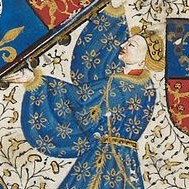 On 25th October 1460, the Act of Accord came into force following the Yorkist success at the battle of Northampton, where King Henry VI was once again placed under Yorkist control. Through the Act of Accord, Parliament recognised Richard Duke of York's position (he had a strong claim to the throne and was King Edward III's great-grandson) and stipulated that, on the death of Henry VI, the crown would not pass to his son Edward but to the Duke of York and his heirs. This act would prove the catalyst for the great battles that would follow in the following months at Wakefield, St Albans, Mortimer's Cross and Towton. |