This Coming Week In History
This week in history
| Date | Event |
|---|---|
| 24/7/1454 | On 24th July 1454, Henry Holland, Duke of Exeter, son-in-law of Richard Duke of York, was apprehended and imprisoned in Pontefract Castle. Exeter believed he had been overlooked for the Protectorship of England, granted to York on the 27th March ‘by advice and assent of the Lords Spiritual and Temporal of the Commonality of England’ by virtue of Henry VI’s six months’ continuing incapacitation. Exeter was released in mid-March 1455 after Henry’s recovery. |
| 24/7/1484 | On 24th July 1484, a memorandum was implemented by Richard III regarding Sandal Castle: ‘That the household begins 24 July 1484 and continues until 29 September 1485 and in as much as this assignment is not payable before the feast of Easter, the King’s grace has assigned £500 (£535,000 today) to be taken from his coffers towards the expenses and wages of the said household, whereof £100 (£107,000 today) is paid to John Downey, the treasurer, by Master Edmund Chadderton at the feast of Saint Lawrence (10 August 1484)…’ An ordinance accompanying these instructions makes for interesting debate and John Fox has surmised that one Item within this ordinance could indicate the survival of Edward IV’s sons, the famed ‘Princes in the Tower’: ‘my lord of Lincoln and my lord Morley be at one breakfast, the children together at one breakfast…’. Lincoln and Morley did not have children and Richard III’s nephew (Edward) and niece (Margaret) by his dead brother, George, should have been named, as also should any of Edward IV’s daughters released from sanctuary to Richard III by their mother, Elizabeth Woodville. Sandal Castle was a secure, comfortable and isolated location within which to house Richard’s nephews away from political intrigue. A further Item within the ordinance stated: ‘That no boys be in the household but such as be admitted by the council..’ leading Fox to suggest possibly that this was to prevent any news of the former Edward V or his brother the Duke of York reaching the outside world. Coupled with von Popplau’s comments regarding ‘the king’s children and the sons of princes, which are kept like prisoners’ at nearby Pontefract (see the entry for 1st May 1484), the roles of Sandal and/or Pontefract Castles in tumultuous, historical events is ready for more serious investigation. |
| 24/7/1645 |  On 24th July 1645, there was the first mention of Pontefract Castle in the Journals of the House of Commons when Colonel General Poyntz's letter was read announcing its capture. A debate followed, concluding with Sir Thomas Fairfax being ordered by the House to be made military governor.
 |
| 25/7/1328 | On 25th July 1328, Sir Roger Mortimer, Earl of March, who had been party to the deposition of Edward II and now ruled effectively as king with Edward’s widow, Queen Isabella during the minority of Edward III, arrived at Pontefract Castle on his travels from Berwick to York. |
| 25/7/1377 | On 25th July 1377, John of Gaunt was at Pontefract, probably with his mistress Katherine Swynford. With the death of Edward, the Black Prince in 1376, John was the most powerful man in the land. Edward III had died in June 1377 and with the war with France not going well, one of his last acts had been to dissolve Parliament which had refused the Crown’s request for funds. John would begin to undo all the work Parliament had done, making many enemies in the process, whilst making himself defender of both the Crown and royal power. On the 25th July, he granted Katherine the wardship and marriage of the heiress of Bertram de Sauneby in recognition of the 'good and agreeable service' she had and continued to render to 'our dear daughters'. |
| 25/7/1386 | On 25th July 1386, John of Gaunt’s (lord of Pontefract) fleet carrying 7,000 men arrived at Corunna in Galicia, north-west Spain, on his mission to claim Castile. Cleverly picking the Galicians’ celebration of the feast of St James, the English forces met with little, if any, resistance and the holy day was cited as significant in underpinning Gaunt’s claim as Castile’s rightful King. A short stay at Corunna before taking the sacred town of Santiago de Compostela, reinforced, in Gaunt’s eyes, his legitimate claim to Castile. |
| 25/7/1394 | On 25th July 1394, James I of Scotland was born at Dunfermline Abbey, Fife. James had been sent to France for safety over fears about the succession to his father, Robert III, who died in 1406 (James’ elder brother, David, having starved to death in prison in 1402).Captured by pirates, en route to France, at Flamborough Head (some say off the coast of Norfolk) on 22nd March 1406 and handed over to Henry IV, James was held captive by the English for eighteen years in numerous locations until a ransom of £40,000 (£40 million in today's money) was agreed and his marriage in February 1424 to Joan Beaufort secured his release; Joan was a cousin of Henry VI and niece of Thomas Beaufort, 1st Duke of Exeter, and Cardinal Henry Beaumont. James was crowned King of Scotland at Scone Abbey on 21st May 1424 (some say 2nd). He had been held prisoner in Pontefract Castle and this seems to have been during the latter stages of his captivity in England around May-August 1423, possibly even up to early December although James was in Durham during this month. At Pontefract, English and Scottish ambassadors agreed to his release in exchange for an Anglo-Scottish truce. James’ ransom of £40,000 sterling in ‘expenses’, to be paid off over six years, was set against the redemption of twenty noble hostages. Significantly, this was a deliberately generous reduction of the ransom first sought for James in 1416 and was far short of what had in fact been spent on his residency, wardrobe and retinue. |
| 25/7/1399 | On 25th July 1399, Sir John Pelham, one of John of Gaunt’s (lord of Pontefract) retainers, wrote to his son, Henry Bolingbroke, at Pontefract from Pevensey Castle where he was the Constable: ‘My dear Lord……thank you (for) your comfortable letter that ye sent me from Pontefract that come to me on Mary Magdalene day (22nd July); …I was never so glad as when I heard by your letter that ye were strong enough with the grace of God for to keep you from the malice of your enemies…… I am here by laid in manner of a siege with the county of Sussex, Surrey and a great parcel of Kent, so that I may nought out of none victuals get me but with much hard. Wherefore my dear if it like you by the advice of your wise counsel for to get remedy of the salvation of your castle and withstand the malice the shires aforesaid. And also that ye be fully informed of their great malice workers in these shires which that haves so despitefully wrought to you, and to your castle, to your men and to your tenants for this country have yai (sic) wasted for a great while. Farewell, my dear lord, the holy Trinity you keep from your enemies, and ever send me good tidings of you. Written at Pevensey in the castle on St Jacob day last past.’ This letter is purported to be the oldest private letter in the English language. |
| 26/7/1214 | On 26th July 1214, John de Lacy, lord of Pontefract, was made Keeper of Castle Donington, Leicestershire. This was returned to him by King John in lieu of his surrender of hostages, including his younger brother. |
| 27/7/1380 | On 27th July 1380, Richard II granted Mary de Bohun’s marriage to John of Gaunt’s (lord of Pontefract) son, Henry of Lancaster for 5,000 marks (£2.5 million today). Gaunt was excused this sum as he was owed at least as much for his war ‘expenses’. The marriage would take place seven months later. |
| 27/7/1447 | On the 27th July 1447, Richard Duke of York, owner of Sandal castle, was appointed Lord Lieutenant of Ireland for a term of ten years. The length of this appointment was twice as long as would be normal and would keep Richard well away from the court of Henry VI for a prolonged period. However, it is also true to say that the appointment did provide Richard with some stability whilst offering the English-controlled parts of Ireland the same long-term certainty. York would not leave for Ireland however for nearly another two years. |
| 27/7/1476 | On 27th July 1476, the Fotheringhay Procession of Richard, Duke of York’s corpse, passed through Grantham on its way from the Priory at Pontefract, led by Edward IV. A later historian making notes on Grantham and its church, recorded: ‘His coffin lay on a funeral car drawn by seven horses, the figure of an angel robed in white, stood at the foot of the bier, bearing in his hand a crown, to signify that had he lived he would have reigned……His widow held the Lordship of Grantham and its Soke, and owned the George hostelry as her private property, which she left in remainder to Fotheringhay Priory, her husband and her own burial place. She may have joined the funeral procession from her house, the George…’ |
| 27/7/2020 | On 27th July 2020, DigVentures returned to Pontefract Castle in a three-weeks' archaeological dig to finish excavating the drawbridge pit that they had unearthed in 2019. Funded by Historic England, the project was an opportunity to carry out further investigation of the gatehouse following the unexpected discovery of the remains of a barbican and drawbridge pit during the Key to the North project in 2016. Wakefield Council was supported and advised on the excavations by Historic England and the West Yorkshire Archaeology Advisory Service (WYAAS).The excavations revealed some interesting masons' marks and artefacts that helped to date the gatehouse as well as an 8m deep drawbridge pit. |
| 28/7/1338 | On 28th July 1338, Robert de Bosevill, Constable of Pontefract Castle, was appointed as king’s justice in the commission in the West Riding in the county of Yorkshire. |
| 28/7/1484 | On 28th July 1484, whilst staying at Pontefract Castle between the 23rd and the 29th of that month, Richard III granted a charter to the borough under the seal of the Duchy of Lancaster. The government of the town was vested in thirteen comburgesses chosen for life from among 'the more creditable sort of men' who annually were to elect one of their number as mayor. The original comburgesses were elected at Michaelmas (29th September) 1484. |
| 28/7/1540 | On 28th July 1540, Catherine Howard married Henry VIII, nineteen days after Anne of Cleves' marriage was annulled and on the same day as the execution of Thomas Cromwell for high treason. Catherine was first cousin to Anne Boleyn and had been a lady-in-waiting to Anne of Cleves. Later in the marriage, Henry found out about Catherine's purported infidelity while the court was staying at Pontefract Castle. |
| 28/7/1645 | On 28th July 1645, Pontefract was mentioned in Parliament when papers and letters taken at the castle were referred to the Committee for the King's Cabinet letters. |
| 28/7/1884 | On 28th July 1884, Pontefract Castle was officially re-opened to the public following extensive renovation works to coincide with the 400th anniversary of the town's incorporation as a municipality under the charter of Richard III. |
| 29/7/1483 | On 29th July 1483, Richard III, lord of Sandal, had, according to Thomas More (drawing on information from Bishop Morton) writing his ‘History of King Richard III’ more than thirty years later, ordered the deaths of his nephews, the fabled Princes in the Tower. Richard headed from London on this date on his royal progress of the North. Richard wrote to his Chancellor, John Russell, from Minster Lovell, on this date: ‘..we understand that certain persons of such as of late had taken upon them the fact of an enterprise, as we doubt not ye have heard, be attached and in ward.’ The ‘enterprise’ some have claimed was part of a Woodville-inspired coup to free the boys from the Tower. More claimed that the Duke of Buckingham, who had, up to this point, been a staunch ‘Ricardian', was so upset by the king’s orders that he rebelled not long afterwards. More’s account had Sir James Tyrell, Richard’s servant, commit their murders; based on a supposed confession by Tyrell in 1502. |
| 29/7/1772 | On 29th July 1772, around noon, John Wesley opened a meeting room in Pontefract which had been established by his followers. Castle Chain House was taken by John Shepherd, partly as his accommodation and for use by travelling preachers with the rest used as a place of worship. The first Methodist chapel was built in Pontefract in 1789 and, in 1796, the town was made the head of a considerable circuit of twenty-four preaching places with two stationed preachers, covering an area from Barnsdale to Wetherby. |
| 30/7/1447 | On 30th July 1447, Richard Duke of York and lord of Sandal Castle, was appointed Lieutenant of Ireland for ten years on a fee of 4,000 marks (£3.05 million in today’s money), followed by an annual salary of 2,000 marks. |
| 30/7/1447 | On 30th July 1447, a nearly eight-years-old Anne Plantagenet, first child of Richard, Duke of York and lord of Sandal Castle, married seventeen-years-old Henry Holland, (later Earl of Exeter). Holland was to prove a thorn-in-the-side for York as he remained loyal to Henry VI and was a commander at the Battle of Wakefield in 1460 at which York perished. |
| 30/7/1476 | On 30th July 1476, the funeral services for Richard, Duke of York’s (former lord of Sandal Castle) re-interment at Fotheringhay along with his son, Edmund, were held at St Mary and All Saints Church. After Masses and sermons, ritual offerings of pieces of gold cloth were made. York’s black warhorse, still alive sixteen years after his death, was ridden into the church by Lord Ferrers carrying an axe with the blade facing downwards. York was buried in the choir and Edmund in the lady chapel. A huge feast followed with reportedly up to 20,000 present. York’s widow, Cecily, apparently was absent for an unknown reason. |
| 30/7/1902 | On 30th July 1902, Hansard’s Parliamentary Debates recorded: ‘ Mohill Union (County Leitrim, Ireland) – Paupers sent from Pontefract to Mohill, Withdrawal of Grant of Five Shillings Outdoor Relief by the Pontefract Guardians.’ |
Last week in history
| Date | Event |
|---|---|
| 20/7/1318 | On 20th July 1318, a second conciliatory mission met Thomas, Earl of Lancaster and lord of Pontefract, comprising much the same personnel as the first one earlier that month but with Roger Mortimer replacing Hugh Despenser the Younger. Negotiations were centred around Edward II’s observance of the Ordinances imposed on him in 1311. |
| 20/7/1381 | Throughout June 1381, the Peasant's Revolt had brought chaos and turmoil to the kingdom of the young King Richard II. As John of Gaunt, lord of Pontefract Castle, was the quasi-ruler of England during the young king’s minority, much of the anger of the mob was directed at him; in order to pay for the war in France, Gaunt had replaced the graduated rate of tax by the poll tax, which levied a tax of one shilling per head (£31 in today’s money) across the whole population. It was mainly due to the bravery of Richard II confronting the protesters that the revolt was defeated but not before the Savoy Palace, the grand London home of John of Gaunt, was totally destroyed. Fortunately, John was in Berwick, but his second wife, Constance, had fled north to seek refuge at Pontefract Castle, only to be refused entry by the constable. We can perhaps speculate that the reason for this was that John of Gaunt’s mistress, Katherine Swynford, having been sent north to Pontefract, was already in residence. We know that John was in residence at Pontefract from the 20th to 21st July 1381 having sent his household there, arranging for firewood and the best wine to be delivered to the castle. |
| 20/7/1455 | Richard Duke of York's (lord of Sandal Castle) daughter, Ursula, was born at Fotheringhay, Sunday 20th July 1455. |
| 20/7/1645 | On 20th July 1645, the Royalists and Parliamentarians met and a treaty was made and signed for the surrender of Pontefract Castle. The siege had lasted nearly five months and the besieged Royalists had shown great courage. The treaty stated that 'the castle is to be delivered up to the parliament tomorrow at 8 o'clock with everything therein, save that the officers are allowed to carry away what is properly their own, so that it exceeds not what a cloak bag will contain, and the garrison are to march to Newark'. Thus ended the second siege of Pontefract Castle during which the Parliamentarians lost 469 soldiers whilst the besieged lost 99 persons. The local gentry who had assisted in the defence of the castle obtained permission to return to their homes, but continued to be closely watched by the Parliamentarians and were all heavily fined for their obstinate adherence to the Royalist cause. |
| 20/7/1648 | On 20th July 1648, a Council of War at Pontefract Castle agreed:
These ensueing orders are agreed vpon att a Councell of Warr in Pontefract Castle July 20th 1648.
First Itt is ordered & agreed vpon that after the armeinge of the Goun, Co |
| 20/7/1859 | On 20th July 1859, Jeannette Emmett Leatham (Cunard) was born in New York , the daughter of Sir Edward Cunard, 2nd Baronet, and Mary Bachelor McEvers. Part of the Cunard shipping family, Jeannette married Edward Leatham on 28th July 1883 and devoted her time to philanthropic causes, supporting children’s homes and helping to create the pleasure gardens and museum at Pontefract Castle. She died on 12th October 1919. |
| 21/7/1476 | On Sunday 21st July 1476, the bodies of Richard, 3rd Duke of York and his son Edmund, Earl of Rutland, were exhumed at the Priory of St Richard near Pontefract Castle, both killed at Wakefield some sixteen years before. Their coffins were placed beneath cloths of gold coverings bearing a white satin cross with so many burning candles surrounding the caskets that the church’s doors had to be kept open and some windows removed. A life-sized effigy of York kneeling in prayer above his coffin, was dressed in dark blue gowns trimmed with ermine, the mourning clothes of a king. His claim to have been King by Right of England and France was reinforced by an angel holding a crown just above his head. |
| 21/7/1484 | By 21st July 1484, Richard III was establishing the Council of the North with places of residence at Sandal Castle and Sheriff Hutton. The Council was now institutionalised as a formal branch of the royal council proper under the presidency of John de la Pole, Earl of Lincoln, Richard’s nephew and heir. Its main objectives were to give justice and promote peace throughout the northern shires of Yorkshire, Durham, Cumberland, Westmorland and Northumberland. Edward IV had given his brother, Richard, pre-eminence beyond the Trent in 1472 as ‘Lord of the North’ and the Council possessed both civil and criminal jurisdiction, the power of investigating, commanding the presence of witnesses by subpoena, ordering by decree, giving verdicts and setting penalties. Only some of its members are known: Clarence’s son, the Earl of Warwick; Lord Morley and Henry Percy, Earl of Northumberland; Lord Scrope of Bolton; Baron Greystoke; Sir Francis Lovell; Sir James Harrington and Sir William Parre. The Council’s budget was 2,000 marks per annum (£1.72 million in today’s money) and was to meet every three months at least at York. The Council remained operational in various forms until 1641. Its regulations included: “These articles following be ordained and established by the king’s grace to be used and executed by my Lord of Lincoln and the lords and others of his council in the North parts for his surety and the well-being of the inhabitants of the same. First, the king wills that no lord nor other person appointed to be of his council, for favour, affection, hate, malice or bribery, shall speak in the otherwise than the king’s laws and good conscience shall require, but be indifferent and in no way partial, as far as his wit and reason will allow him, in all manner of matters that shall be administered before them... [The] council shall meet, wholly if it may be, once in the quarter of the year at least, at York, to hear, examine and order all bills of complaints and others shown there before them, and oftener if the case require. [The] council shall have authority and power to order and direct [in respect of] all riots, forcible entries, disputes and other misbehaviours against our laws and peace...in these parts... [Our] council, for great riots...committed in the great lordships or otherwise by any person, shall commit that person to ward in one of our castles near where the riot is committed... [The] council, as soon as they have knowledge of any assemblies or gatherings made contrary to our laws and peace, [shall arrange] to resist, withstand and punish the same... [We] will and straitly charge all and each of our officers, true liegemen and subjects in these north parts to be at all times obedient to the commandments of our council in our name, and duly to execute the same, as they and each of them will eschew our great displeasure and indignation... " |
| 21/7/1627 | On 21st July 1627, John Savile was created 1st Baron Savile of Pontefract. He had been MP for Lincoln, Sheriff of Lincolnshire, Knight of the Shire for Yorkshire, custos rotulorum of the West Riding of Yorkshire (principal justice of the peace in an English county), Privy Councillor, Comptroller of The Household and receiver of the revenues from recusants in the north. He had a long-standing feud with Thomas Wentworth (later Earl of Strafford) which included a famous dispute in Parliament. Savile built Howley Hall in Batley (he was buried in Batley Church in September 1630) and tradition says that Rubens stayed there and painted a view of Pontefract for him. |
| 21/7/1645 | On 21st July 1645, Pontefract Castle was surrendered to Parliament by its Royalist garrison. |
| 22/7/1240 | On 22nd July 1240, John de Lacy, lord of Pontefract Castle, died. He was one of the 25 barons who forced the royal sealing and overseeing of the enactment of Magna Carta in 1215. |
| 22/7/1298 | On 22 July 1298, Sir Henry de Lacy, lord of Pontefract, in the First War of Scottish Independence, led the first line of English cavalry at the Battle of Falkirk against the Scots under William Wallace. Scottish casualties were heavy and although Wallace evaded capture, he soon resigned as Guardian of Scotland. Reputedly, Edward I’s huge army for this campaign was in the order of 26,000 men and 3,000 cavalry. |
| 22/7/1298 | On 22nd July 1298, John de Warenne , 6th Earl of Surrey and owner of Sandal Castle, was present at the Battle of Falkirk which would prove a decisive English victory in Edward I's conflict with the Scots. |
| 22/7/1395 | On 22nd July 1395, delegates from the Duchy of Aquitaine met Richard II at Eltham Palace to tell the king that Aquitaine was irrevocably annexed to the Crown of England and could not be given away by him. Evidence produced included a letter by Edward III publicly affirming the duchy’s established status and assurances by Richard himself during earlier negotiations that Aquitaine’s privileges were ‘sacrosanct’. A plan had been mooted to grant Aquitaine to John of Gaunt, lord of Pontefract, so that Richard could avoid doing homage to the King of France for this territory. |
| 22/7/1476 | On 22nd July 1476, the Fotheringhay Procession left Pontefract with the bodies of Richard Duke of York (former lord of Sandal Castle) and his son Edmund Earl of Rutland, who had both been killed at the Battle of Wakefield in December 1460. These bodies had been interred in the Franciscan Friary of St Richard, which was located on the site of the present day Valley Gardens. Led by Richard, Duke of Gloucester, the procession passed through Doncaster, Blyth, Newark, Grantham and Stamford reaching Fotheringhay on the 29th July. |
| 22/7/1537 | On 22nd July 1537, Lord Darcy, Constable of Pontefract Castle during the previous year’s Pilgrimage of Grace, who had been beheaded for treason three weeks before, was posthumously degraded from his rank as Knight of the Garter and his vacant stall bestowed upon Thomas Cromwell, who had drawn up the charges against him and had then been one of his judges. |
| 22/7/1645 | On 22nd July 1645, Parliament's Colonel General Poyntz called on the Royalist defenders to surrender Sandal Castle, but they rejected the call, although hopes of immediate relief were remote. |
| 22/7/1679 | On 22nd July 1679, after the passing of the Act of Uniformity (1662) against popish recusants intent on re-establishing Roman Catholicism and conspiring against the life of Charles II, an affidavit was presented to the Sessions at Pontefract: ‘As for Mr Thomas Hippon and Alis Hippon, they become bound before Mr Whyte to appear at this Session, as popish recusants. As for Mr John Hippon, Margaret Thimbleby and Alis the wife of John Spinke, they are non est Inuentus’ i.e. not yet found in this jurisdiction. |
| 22/7/1966 | On 22nd July 1966, Ferrybridge Henge and two round barrows were first listed and protected as a Scheduled Ancient Monument: List Entry Number: 1005789. A Neolithic henge near Ferrybridge, West Yorkshire (grid reference SE47462424), it is close to the A1 and M62 and Ferrybridge power station. Ferrybridge Henge is the furthest south of Yorkshire's henges, and is the only one in West Yorkshire. There was activity on the site before the current henge in the form of circular monuments and hengiform monuments dating from 3500 BC to 3000 BC. Ferrybridge Henge dates from around 3000 BC to 2500 BC. Around 2000 BC–1500 BC, during the early Bronze Age, barrow burials were performed on the site. Inhumations were discovered with grave goods such as ceramic pots and flint tools. The area was probably abandoned from about 1500 BC to 500 BC when there was some reoccupation by Iron Age farmers. The henge was not cultivated and may have been retained as a shrine for the Iron Age people of the area and later during the Romano-British period. An Iron Age sword scabbard was discovered in the inner henge ditch as well as a Roman coin. That burials continued in the area around the henge in the Saxon period despite the presence of a Christian cemetery nearby has been taken as evidence of pagan beliefs prevailing in the area. Ferrybridge Henge and its surrounding area were used as farmland during the medieval period. The site was excavated by West Yorkshire Archaeological Services in 1991. In 2007, a suspected extension of the henge was unearthed near Pontefract. It was discovered when archaeologists were investigating a site intended for the construction of a row of houses; once the archaeological survey was complete, the construction went ahead. Ferrybridge Henge is a circular site and is about 180 metres (590 ft) in diameter. The henge is surrounded by two ditches and a bank. The inner ditch is 10 metres (33 ft) wide and 2.5 metres (8.2 ft) deep. There is a 15-metre (49 ft) wide berm between the inner ditch and a 15-metre (49 ft) wide limestone bank. Separating the bank from the outer ditch is another berm, also 15 metres (49 ft) wide; the outer ditch is 12 metres (39 ft) wide and 1.5 metres (4.9 ft) deep. This layout is typical of other henges. The site has two entrances, one in the north east and one in the south west. |
| 22/7/2016 | 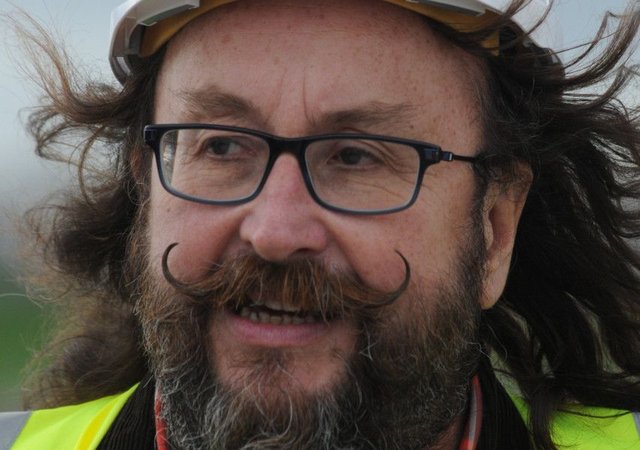 On 22nd July 2016, the television programme, 'The Hairy Builder with Dave Myers' was broadcast on BBC2. The programme showed Dave Myers (one of the two famous 'Hairy Biker' cooks ) helping builders restore parts of Pontefract Castle for future generations. On 22nd July 2016, the television programme, 'The Hairy Builder with Dave Myers' was broadcast on BBC2. The programme showed Dave Myers (one of the two famous 'Hairy Biker' cooks ) helping builders restore parts of Pontefract Castle for future generations. |
| 23/7/1215 | On 23rd July 1215 King John wrote a strongly-worded letter, from a council at Oxford, to the men of Yorkshire, covering all ranks (and by implication John de Lacy, lord of Pontefract), to hand back possessions they had seized from the king, by the 15th August; the same date that London was to be returned to the king. On the 16th July, at Oxford King John had demanded the restoration of his treasure from London plus the formal restoration of peace. The barons had sought to extend their power over institutions such as the Exchequer in addition to presenting further claims for restoration of lands from the king and intervening in the appointment of local officials to secure favourable terms. Unsurprisingly the council ended abruptly with the Barons leaving "with great rancour". |
| 23/7/1229 | On 23rd July 1229, John de Lacy, lord of Pontefract, was at the Northampton council convened by Henry III which agreed to muster an army and fleet at Portsmouth on 13th October to recover 'lost' lands in France. |
| 23/7/1326 | On 23rd July 1326, Henry of Lancaster, brother of the executed Thomas, Earl of Lancaster, and later to be lord of Pontefract when Edward III returned the earldom to him, was made Joint Commissioner of Array in the counties of Warwick, Leicester, Nottingham and Derby by Edward II. The king was now under enormous pressure to mobilise his defences against possible invasion by France or Roger Mortimer and his mistress, Queen Isabella. |
| 23/7/1483 | On 23rd July 1483, Richard III, lord of Sandal, wrote an agreement protecting the widow (Katherine Neville) and children of Lord Hastings who had been executed for treason the previous month. No attainder was issued meaning that his family kept their titles and land and Hastings’ brother, Ralph was pardoned on 2nd August. |
| 24/7/1454 | On 24th July 1454, Henry Holland, Duke of Exeter, son-in-law of Richard Duke of York, was apprehended and imprisoned in Pontefract Castle. Exeter believed he had been overlooked for the Protectorship of England, granted to York on the 27th March ‘by advice and assent of the Lords Spiritual and Temporal of the Commonality of England’ by virtue of Henry VI’s six months’ continuing incapacitation. Exeter was released in mid-March 1455 after Henry’s recovery. |
| 24/7/1484 | On 24th July 1484, a memorandum was implemented by Richard III regarding Sandal Castle: ‘That the household begins 24 July 1484 and continues until 29 September 1485 and in as much as this assignment is not payable before the feast of Easter, the King’s grace has assigned £500 (£535,000 today) to be taken from his coffers towards the expenses and wages of the said household, whereof £100 (£107,000 today) is paid to John Downey, the treasurer, by Master Edmund Chadderton at the feast of Saint Lawrence (10 August 1484)…’ An ordinance accompanying these instructions makes for interesting debate and John Fox has surmised that one Item within this ordinance could indicate the survival of Edward IV’s sons, the famed ‘Princes in the Tower’: ‘my lord of Lincoln and my lord Morley be at one breakfast, the children together at one breakfast…’. Lincoln and Morley did not have children and Richard III’s nephew (Edward) and niece (Margaret) by his dead brother, George, should have been named, as also should any of Edward IV’s daughters released from sanctuary to Richard III by their mother, Elizabeth Woodville. Sandal Castle was a secure, comfortable and isolated location within which to house Richard’s nephews away from political intrigue. A further Item within the ordinance stated: ‘That no boys be in the household but such as be admitted by the council..’ leading Fox to suggest possibly that this was to prevent any news of the former Edward V or his brother the Duke of York reaching the outside world. Coupled with von Popplau’s comments regarding ‘the king’s children and the sons of princes, which are kept like prisoners’ at nearby Pontefract (see the entry for 1st May 1484), the roles of Sandal and/or Pontefract Castles in tumultuous, historical events is ready for more serious investigation. |
| 24/7/1645 |
On 24th July 1645, there was the first mention of Pontefract Castle in the Journals of the House of Commons when Colonel General Poyntz's letter was read announcing its capture. A debate followed, concluding with Sir Thomas Fairfax being ordered by the House to be made military governor. |
| 25/7/1328 | On 25th July 1328, Sir Roger Mortimer, Earl of March, who had been party to the deposition of Edward II and now ruled effectively as king with Edward’s widow, Queen Isabella during the minority of Edward III, arrived at Pontefract Castle on his travels from Berwick to York. |
| 25/7/1377 | On 25th July 1377, John of Gaunt was at Pontefract, probably with his mistress Katherine Swynford. With the death of Edward, the Black Prince in 1376, John was the most powerful man in the land. Edward III had died in June 1377 and with the war with France not going well, one of his last acts had been to dissolve Parliament which had refused the Crown’s request for funds. John would begin to undo all the work Parliament had done, making many enemies in the process, whilst making himself defender of both the Crown and royal power. On the 25th July, he granted Katherine the wardship and marriage of the heiress of Bertram de Sauneby in recognition of the 'good and agreeable service' she had and continued to render to 'our dear daughters'. |
| 25/7/1386 | On 25th July 1386, John of Gaunt’s (lord of Pontefract) fleet carrying 7,000 men arrived at Corunna in Galicia, north-west Spain, on his mission to claim Castile. Cleverly picking the Galicians’ celebration of the feast of St James, the English forces met with little, if any, resistance and the holy day was cited as significant in underpinning Gaunt’s claim as Castile’s rightful King. A short stay at Corunna before taking the sacred town of Santiago de Compostela, reinforced, in Gaunt’s eyes, his legitimate claim to Castile. |
| 25/7/1394 | On 25th July 1394, James I of Scotland was born at Dunfermline Abbey, Fife. James had been sent to France for safety over fears about the succession to his father, Robert III, who died in 1406 (James’ elder brother, David, having starved to death in prison in 1402).Captured by pirates, en route to France, at Flamborough Head (some say off the coast of Norfolk) on 22nd March 1406 and handed over to Henry IV, James was held captive by the English for eighteen years in numerous locations until a ransom of £40,000 (£40 million in today's money) was agreed and his marriage in February 1424 to Joan Beaufort secured his release; Joan was a cousin of Henry VI and niece of Thomas Beaufort, 1st Duke of Exeter, and Cardinal Henry Beaumont. James was crowned King of Scotland at Scone Abbey on 21st May 1424 (some say 2nd). He had been held prisoner in Pontefract Castle and this seems to have been during the latter stages of his captivity in England around May-August 1423, possibly even up to early December although James was in Durham during this month. At Pontefract, English and Scottish ambassadors agreed to his release in exchange for an Anglo-Scottish truce. James’ ransom of £40,000 sterling in ‘expenses’, to be paid off over six years, was set against the redemption of twenty noble hostages. Significantly, this was a deliberately generous reduction of the ransom first sought for James in 1416 and was far short of what had in fact been spent on his residency, wardrobe and retinue. |
| 25/7/1399 | On 25th July 1399, Sir John Pelham, one of John of Gaunt’s (lord of Pontefract) retainers, wrote to his son, Henry Bolingbroke, at Pontefract from Pevensey Castle where he was the Constable: ‘My dear Lord……thank you (for) your comfortable letter that ye sent me from Pontefract that come to me on Mary Magdalene day (22nd July); …I was never so glad as when I heard by your letter that ye were strong enough with the grace of God for to keep you from the malice of your enemies…… I am here by laid in manner of a siege with the county of Sussex, Surrey and a great parcel of Kent, so that I may nought out of none victuals get me but with much hard. Wherefore my dear if it like you by the advice of your wise counsel for to get remedy of the salvation of your castle and withstand the malice the shires aforesaid. And also that ye be fully informed of their great malice workers in these shires which that haves so despitefully wrought to you, and to your castle, to your men and to your tenants for this country have yai (sic) wasted for a great while. Farewell, my dear lord, the holy Trinity you keep from your enemies, and ever send me good tidings of you. Written at Pevensey in the castle on St Jacob day last past.’ This letter is purported to be the oldest private letter in the English language. |
| 26/7/1214 | On 26th July 1214, John de Lacy, lord of Pontefract, was made Keeper of Castle Donington, Leicestershire. This was returned to him by King John in lieu of his surrender of hostages, including his younger brother. |
Next week in history
| Date | Event |
|---|---|
| 3/8/1394 | On 3rd August 1394, Anne of Bohemia, queen to Richard II, was buried at Westminster Abbey. Unfortunately, John of Gaunt turned up late to the funeral causing a furious Richard to ‘smite him in the face and draw blood’. Following this, John prudently headed north to Pontefract Castle. |
| 3/8/1403 | On 3rd August 1403, Henry IV arrived at Pontefract Castle from Nottingham after the Battle of Shrewsbury on 21st July at which Henry Percy (Hotspur) had been killed and Thomas Percy, Earl of Worcester (Hotspur’s uncle) and Sir Richard Vernon and Sir Richard Venables beheaded. Henry was pursuing Henry Percy, Earl of Northumberland (Hotspur’s father), for his complicity in the Percy family’s revolt and his mustering an army against him at Tadcaster. |
| 4/8/1265 | John de Warenne , 6th Earl of Surrey and owner of Sandal Castle, had returned from his exile on the continent following the defeat of Henry III at Lewes in 1264. On 4th August 1265, John was present at the climactic Battle of Evesham when Henry III would finally defeat Simon de Montfort and his supporters. |
| 4/8/1482 | On 4th August 1482, Richard, Duke of Gloucester, lord of Sandal, tentatively agreed a truce with the Scots. His army encamped at Edinburgh with the Scottish king, James III, enclosed safely within its castle, Richard saw the futility of a long siege and, therefore, sought terms. The Scots agreed: to repay monies that had previously been sent as an advance dower payment for the marriage of James III’s son to Cecily of York; grant control of Edinburgh Castle to the Duke of Albany; consider ceding Berwick to the English. |
| 5/8/1318 | On 5th August 1318, Edward II met Thomas, Earl of Lancaster and lord of Pontefract, on a bridge over the River Soar near Loughborough to confirm the Treaty of Leake requiring the king to observe the Ordinances of 1311. Edward gave Lancaster a kiss of peace and pardoned him for all misdemeanours. |
| 5/8/1415 | On 5th August 1415, Richard, Earl of Cambridge was beheaded for his involvement in the Southampton plot to depose Henry V and replace him with Richard’s brother-in-law and then Mortimer heir, Edmund (great-great-grandson of Edward III and heir presumptive to Richard II). Cambridge and his wife Anne Mortimer were the parents of Richard, Duke of York, lord of Sandal Castle, who was later to play an integral part in the Wars of the Roses. |
| 6/8/1307 | Thomas, Earl of Lancaster and later lord of Pontefract, witnessed Piers Gaveston’s return from exile and creation as Earl of Cornwall by Edward II on 6th August 1307 at Dumfries. This was one of Edward’s first acts on becoming king on the death of his father on 7th July that year. Thomas was with the royal party on three occasions later in the month, and after a visit to Pickering he came south with Edward through Nottinghamshire and Northampton to Langley. Throughout the late winter and early spring of 1308, he was apparently at Westminster, and during the autumn he followed the king to Chertsey, Byfleet, and then back to London. |
| 6/8/1403 | On 6th August 1403, Henry IV departed Pontefract Castle for York awaiting the arrival of the Earl of Northumberland and for his complete submission to Henry after the Percy rebellion. The Earl’s son’s head (Henry Hotspur) had been placed over one of York city’s gates after defeat at the Battle of Shrewsbury. |
| 7/8/1241 | On 7th August 1241, an order was made to the Constable of Pontefract to ‘cause the foals in the stud formerly of John de Lacy, formerly earl of Lincoln, which ought to be sold in this season, to be removed and sold by the view and testimony of law-worthy men, and to cause the monies arising therefrom to be kept safely until the king orders him otherwise. He is also to cause the old oxen to be taken away from the king’s plough-teams by the view of the same, causing them to be fattened in the king’s larder, and he is to place younger oxen in their stead from the vaccaries (a place for keeping cattle) formerly of the aforesaid earl.’ |
| 7/8/1244 | On 7th August 1244, whilst the Honour of Pontefract was in the control of the king during Edmund de Lacy’s minority, Henry III gave his brother Richard, Earl of Cornwall, 50 head of deer from Pontefract Park to stock his park at Knaresborough. |
| 7/8/1318 | On 7th August 1318, with Thomas of Lancaster , lord of Pontefract, and King Edward II having temporarily resolved their differences, somewhere between Loughborough and Leicester, those barons that had opposed Lancaster presented themselves before him and were 'received into his grace'; a notable exception being John de Warenne, 7th Earl of Surrey and owner of Sandal Castle. It would appear that King Edward II abandoned John de Warenne in the interests of peace, leaving Lancaster to pursue his private feud with John. This had seen Lancaster's wife, Alice, abducted by one St Richard de St Martin, a knight in de Warennes’s retinue, whilst Lancaster was opposed to John's divorce from his wife Joan. The feud, which had seen Lancaster capture de Warenne’s castles at Sandal and Conisbrough, would culminate in Lancaster hunting down John and imprisoning him at Pontefract Castle. De Warenne was forced to come to terms with Lancaster in 1319, which meant giving up most of his Yorkshire estates, including Sandal. King Edward II stated that Lancaster could hold the estates during de Warenne’s lifetime, but they would revert to John's heirs on his death. De Warenne also acknowledged that he owed Lancaster a debt of £50000 (over£43 million today), although none was ever collected. |
| 7/8/1405 | On 7th August 1405, Henry IV issued a writ from Pontefract to the Constable of Hereford, directing him to raise a force to defend against Charles VI’s French invasion (led by Marshal Jean de Rieux and Jean de Hanguest, lord of Hugueville) in support of Owen Glendower. The combined forces had burned the towns of Haverfordwest, Tenby and Carmarthen and were within ten miles of Worcester when Henry arrived there. This fifth Welsh campaign by Henry was, like its predecessors, short and inconclusive. |
| 8/8/1315 | On 8th August 1315, Thomas of Lancaster, lord of Pontefract, was made Lieutenant and Chief Captain of The King’s Army (Edward II) between Trent and Roxburgh. His position was to last until 20th November 1316. |
| 8/8/1383 | On 8th August 1383, Henry Despenser, Bishop of Norwich, made his way with his army to Gravelines after failing to capture Ypres and/or engage the French king Charles VI in battle. Despenser had gained support from Pope Urban VI in Rome for a crusade against supporters of the ‘alternative’ Pope, Clement VII, in Avignon, and the Clementist Count of Flanders was considered a legitimate target for Despenser. John of Gaunt, lord of Pontefract, (overlooked by Parliament to lead the crusade) was at Pontefract when he learned of Despenser’s imploding venture and summarily mustered his men to sail from the Isle of Thanet to Flanders to try and salvage the crusaders. Despenser returned home humiliated and Gaunt negotiated with Philip of Burgundy, Charles VI’s uncle, to try and repair the damage. |
| 8/8/1398 | On 8th August 1398, John of Gaunt, lord of Pontefract, was made Constable of the Principality of Wales and Constable of the Principality of Chester. |
| 8/8/1649 | The will of executed Colonel John Morris, last Governor of Pontefract Castle, dated 8th August 1649 included: ‘…I give and bequeath in manner following, vizt. All my Lands, tenements and hereditaments which now I have, or of right ought to have, I give and bequeath to Robert Marris, my eldest sonne…….that he shall pay to his Brother Castilion, and to his sister, Marye, the Sume of Three hundred pounds a piece of good and lawfull money of England. And if it happen that my now wife shall have another child, Then my mind and Will is that my said Sonne, Robert, shall pay unto Castilion and Mary…but two hundred pounds a piece; And other two hundred pounds to that Child which shall please God, my Wife shall bring forth…..my Will is that the Third part thereof shall be unto my Wife, Marjory (Jur) Morris and the residue equallie to be divided amongst my said youngest Children……….And if the Bond of Mr Ridges be recovered, That then my Brother Edward, my Sister Elizabeth, my Sister Anne, and my Cosen Anne Burbridge, shall have out of the same bond Twentie pounds a piece…’ |
| 8/8/1942 | On 8th August 1942, Ewbanks liquorice factory in Pontefract was badly burned by German incendiaries with the pan, gum and liquorice rooms all damaged causing the factory to be put out of action. During this time, neighbouring Pontefract sweet manufacturers made some Ewbanks’ sweets with some Ewbanks’ workers making parachutes. |
| 9/8/1217 | On 9th August 1217, after John de Lacy, lord of Pontefract, had sworn fealty to Henry III and had been pardoned by his minority government for his support of the barons’ rebellion (refer their defeat at Lincoln in May 1217), his lands were returned to him. |
| 9/8/1277 | On 9th August 1277, John de Warenne, 6th Earl of Surrey and owner of Sandal castle, was one of many nobles, after Edward I and Queen Eleanor, to lay stones on the spot where the high altar of Edward’s new Christian abbey, near Northwich, on the banks of the River Weaver, was to be built. It was intended that Vale Royal (Edward’s preferred name for the abbey) was to be the largest of its kind in Britain, larger than it’s sister house at Fountains, Yorkshire. |
| 9/8/1310 | On 9th August 1310, Edward II was at Pontefract and gave its Dominican friars 13s 4d (£408 in today's money) for one day’s food. |
| 9/8/1318 | 1318 would see a brief lull in the enmity between Earl Thomas of Lancaster and his cousin Edward II sealed by the Treaty of Leake on the 9th August 1318. The hatred had come to a head in 1312 when Thomas had organised the execution of Piers Gaveston, the king's favourite. |
| 9/8/1322 | On 9th August 1322, Edward II gave the following instruction from Alnwick: ‘To Robert de GaldesViy, keeper of certain lands that belonged to Hugh de Cuilly in co. Leicester. Order to deliver to Joan, late the wife of the said Hugh, 16 messuages, a mill, and 16 virgates of land in Gaylene- Morton, and to restore the issues thereof, as the king learns by inquisition taken by Robert de Stok and Roger Hillary that Joan was dowered of the above at the door of the church of Morton by William Trussell, her first husband, when he married her, and that she was seised thereof for thirty-two years and more after his death, and that Thomas le Rous, sheriff of that county, seized the tenements into the king's hands on 20 March, in the 15th year of the king's reign, because the said Hugh was the constable of Thomas, late earl of Lancaster, of his castle of Kenilworth, Hugh having now died in the king's prison of Pontefract castle.’ |
| 9/8/1345 | On 9th August 1345, Henry of Grosmont, nephew of Thomas, Earl of Lancaster and lord of Pontefract, who was now, due to his father’s poor health, virtually Earl of Lancaster, Leicester and Derby and Steward of England, landed at Bordeaux. In just over two weeks, he achieved a great victory at Bergerac and on 21st October defeated a French force at Auberoche a month after his father’s death. |
| 9/8/1484 | On 9th August 1484, Pontefract’s first mayor, John Hill, was confirmed by Parliament. He was the only man to have been Mayor of Pontefract three times. Richard III's charter to Pontefract borough, incorporating this role, was confirmed at Westminster on this date and witnessed by two Archbishops (Bourchier and Rotherham), the Bishops of Lincoln (Russell), Bath and Wells (Stillington) and London (Kemp), the Dukes of Suffolk and Norfolk, the Sheriff of London, Sir Thomas Stanley,, Sir John Wade and the Keeper of the Privy Seal (John Gunthorpe). |
| 9/8/1726 | On 9th August 1726, Volume III of Daniel Defoe’s travelogue A Tour Thro’ the Whole Island of Great Britain: Divided into Circuits or Journies was released (and later on 13th October 1738, the second, revised edition), having been published in three volumes between 1724 and 1727. Defoe (author of Robinson Crusoe in 1719), novelist and pamphleteer wrote about Sandal and Pontefract: ‘South between Wakefield and a Village called Sandal, they shewed us a small square Piece of Ground, which was fenced off by itself; and on which, before the late Civil War, stood a large Stone Cross, just upon the Spot where the Duke of York, fighting desperately, and refusing to yield, tho’ surrounded with Enemies, was killed.’ |
| 9/8/1726 | On 9th August 1726, Volume III of Daniel Defoe’s travelogue A Tour Thro’ the Whole Island of Great Britain: Divided into Circuits or Journies was released (and later on 13th October 1738, the second, revised edition), having been published in three volumes between 1724 and 1727. Defoe (author of Robinson Crusoe in 1719), novelist and pamphleteer wrote about Sandal and Pontefract: ‘From Wakefield, we went to see the ancient Town of Pontefract. …. In Pontefract, and the Castle, much Blood has been spilt, in different Ages. Here, Henry (sic), the great Earl of Lancaster, who was Lord of the Castle, and whose Ancestors had beautified, inlarged, and fortified it, was beheaded by his Nephew, King Edward II with three or four more of the English Barons. Here Richard II was murder’d, and, if History may be credited, in a most cruel manner: and here Antony Earl of Rivers, and Sir Richard Gray, the former Uncle, and the other Brother-in-law to King Edward V were beheaded by King Richard III. In the late Civil Wars, a small Party of brave Fellows took this Castle by Surprize for the King, and desperately defended it to the last Extremity; but being at length obliged to yield, five of them attempted to break thro’ the Besiegers Camp, three of whom perished in the Attempt. The Town is large and well built, but much smaller than it has been. The Castle lies in Ruins, though not demolished…..in the year 1735, the old (market) Cross was pulled down, and a handsome Dome, supported by a Colonnade of Doric Pillars (the charge whereof was defrayed by a Legacy left by one Dupere, an Inhabitant of the Town) was erected for that Purpose. The Ruins of The Castle shew it to have been a Noble Pile. A round Tower, yet standing, is intire, in or near which, the Tradition is, King Richard II was slain. Adjoining to this Tower are Winding airs, which descend into several Vaults, and subterraneous Passages.’ |