This Coming Week In History
This week in history
| Date | Event |
|---|---|
| 10/7/1237 | On 10th July 1237, John de Lacy, lord of Pontefract, was made Constable of Chester and Beeston Castles. |
| 10/7/1423 | On 10th July 1423, safe conduct was granted to William de Fowlis, secretary of Archibald, Earl of Douglas, to travel to Pontefract to treat for a final peace between Scotland and England. |
| 10/7/1645 | On 10th July 1645, the besieged Royalist garrison received an account of the engagement between Sir Thomas Fairfax and General Goring, when it was said that Goring routed Sir Thomas and that Taunton was taken. A drum came from Newark to know whether the castle had surrendered as the Parliamentary forces had spread the rumour that Pontefract Castle had yielded to them. The drum had been kept a prisoner overnight in the house of a Mrs Washington whose husband was in the castle. The drum and Mrs Washington went to the castle where the message was passed on and Mrs Washington, while pretending to shake hands with an acquaintance, gave him two letters. These letters named the day and hour when Sir Marmaduke Langdale intended to come to the garrison's relief and confirmed the account of Goring's victory over Sir Thomas Fairfax. Thus the garrison was encouraged and still continued to annoy the Parliamentary forces as much as possible. |
| 11/7/1372 | On 11th July 1372, Edward III’s fourth surviving son, Edmund of Langley, married his elder brother John of Gaunt’s (lord of Pontefract) wife’s younger sister, Isabella of Castile. She was the daughter of the late King Peter of Castile meaning that Edmund and his heirs were now ‘reserves’ in line for the Castilian throne behind Gaunt. |
| 11/7/1645 | On 11th July 1645, Nathan Drake, Royalist diarist, recorded: ‘ ….This evnings there was 2 boanfires made upon Sandoll Castle, wch we answered wth one from the Round Tower. This day the 2 men wch we sent out 10 daies since to Newarke Came againe to towne, & though they Could not get into the Castle to us yet they Showed forth such signes as we knew we had good newes towards us. This night 2 of those men we sent out 2 nightes before to Sandoll cami in againe.’ |
| 11/7/1656 | On 11th July 1656, Mary Fisher of Pontefract, and another preacher, Ann Austin, were the first Quakers to visit the English North American colonies arriving in Boston’s Massachusetts Bay Colony on board the Swallow. Having already converted the island of Barbados’s Lieutenant Governor to Quakerism, their reception by the New England Puritans was decidedly more hostile and they were imprisoned for five weeks, undressed in public and examined for signs of witchcraft with their books and pamphlets burned, then deported back to Barbados. A 1658 mission ‘testifying to the Universal Light’ (her words) to the Ottoman Empire to explain Quakerism to Sultan Mehmed IV was received attentively and ‘he was very noble unto me and so were all that were about him’. |
| 12/7/1203 | On the 12th July 1203, Isabel de Warenne, the widow of Hamelin de Plantagenet and the 4th Earl of Surrey and owner of Sandal castle, died and was buried next to Hamelin in the Chapter House at Lewes Priory. |
| 12/7/1288 | On 12th July 1288, Alice de Lacy, daughter of Sir Henry de Lacy, lord of Pontefract, was granted letters patent of the castle, town, manor and Honour of Halton in the county of Chester, for and during her life with reversion after her death to the king and his heirs. |
| 12/7/1383 | On 12th July 1383, after the Scots had attacked Wark Castle on the border, John of Gaunt, lord of Pontefract, held talks with their king’s heir, Earl John of Carrick, at Muirhouselaw with a truce agreed on 17th July to last until 2nd February the following year. |
| 12/7/1444 | On 12th July 1444, a Charter of Confirmation was made at Pontefract by, John, 7th Earl of Sutherland: ‘Charter of Confirmation by John, seventh Earl of Sutherland, to Alexander Sutherland, lord of Torboll, of the lands of Torboll. Confirmation, by John, seventh Earl of Sutherland, narrating that he had seen and caused to be read before him at Pontefract in England, a resignation made by Nicholas of Sutherland, lord of the castle of Duffus, at St. Andrew's chapel, of the lands and tenements of Thurboll with the pertinents, namely, lands to the worth of £40 lying within the earldom of Sutherland and shire of Inverness, into the hands of Robert, Earl of Sutherland, as his overlord, whereupon the Earl granted them to Henry of Sutherland, son of Nicholas, in fee and heritage, to him and his heirs male from the Earl and his heirs, for payment of ward and relief and for rendering three suits at the court of the said Earl in Sutherland.’ |
| 12/7/1537 | On 12th July 1537, Robert Aske, one of the leaders of the Pilgrimage of Grace, who had besieged Pontefract Castle the previous year, was drawn through the main streets of York on a hurdle prior to execution on a special scaffold erected outside Clifford’s Tower. Rather than experience a traditional hanging, Aske was reputedly hanged alive in chains being slowly suffocated to death, taking several days to die. |
| 12/7/1645 | On 12th July 1645, Royalist troops received a letter that Sir Marmaduke Langdale had set off with his own forces and 4,000 Irish to raise the siege of Pontefract Castle. The letter was designed to raise spirits and produced the effect intended and the castle agreed to suffer any privations rather than submit to disgraceful terms. If relief did not come, they would consume all food in the castle, set it on fire and either cut their way out through the enemy or nobly fall. After this, two flags of defiance were flown, one from the King's Tower and one from the Round Tower. |
| 13/7/1322 | On 13th July 1322, Edward II sent the following order from York to Thomas Deyvill, Keeper of the Castle and Honour of Pontefract: ‘To Thomas Deyvill, keeper of the castle and honour of Pontefract, and of certain lands in the king’s hands beyond the water of Ouse, co. York. Order not to intermeddle further with the lands of Roger de Novo Mercato in Womersley, and to restore the issues thereof and Roger’s goods and chattels found there.’ |
| 13/7/1381 | On 13th July 1381, John of Gaunt, lord of Pontefract, was at Berwick on his way back to London from Edinburgh, recalled by a letter from Richard II after riots in the capital. Gaunt was also trying to meet up with his wife, Constance, who had fled the troubles and had been hiding at Knaresborough Castle. |
| 13/7/1397 | On 13th July 1397, Richard II, Pontefract Castle’s most famous prisoner, commanded Robert Leigh, Cheshire’s sheriff, to raise a force of 2,000 archers and ordered the sheriffs in London and every English county to proclaim that Thomas Woodstock, Duke of Gloucester, Richard Fitzalan, Earl of Arundel and Thomas Beauchamp, Earl of Warwick had been taken into custody ‘for the peace and safety of the people’. Any gatherings without royal permission were treasonous. |
| 13/7/1645 | On 13th July 1645, letters were received from Sandal Castle, which gave news of Marmaduke Langdale's approach. The Parliamentary forces had raised some fortifications near Ferrybridge, on Brotherton Marsh and some cannon were taken there to secure the pass. The Parliamentary forces had an alarm in the night and both horse and foot remained under arms till morning. About four o'clock, they were seen in the West Field drawn up as though ready for an attack. This was the direction in which Langdale had come before to relieve the castle and it was hoped that he was approaching. At this time, the plague prevailed in the town and, as a result of this, Parliament's General Poyntz withdrew his troops from the town and formed a camp in the West Field, where the general himself henceforth always slept. News that the Skipton horse had pushed through Wakefield and by Sandal in order to join Sir Marmaduke Langdale gave alarm to the Parliamentary forces. |
| 14/7/1364 | On 14th July 1364, John of Gaunt, by right of his wife Blanche (third cousin), became the new lord of Pontefract and received by royal charter a confirmation of all the privileges which his father-in-law, Henry of Grosmont, the 1st Duke of Lancaster, had had before him. |
| 14/7/1385 | On the 14th July 1385, Richard II visited Pontefract Castle, on his first military campaign as leader, to engage the invading Scots who, bolstered by a French army of 1,000 men-at-arms and 600 bowmen under General Jean de Vienne, were attacking northern England. He arrived at York on the 16th. John of Gaunt was preparing to meet Richard at Durham after assembling men and supplies from Pontefract. |
| 14/7/1399 | On 13th or 14th July 1399, Henry Bolingbroke reached Pontefract with an estimated sixty supporters, after landing at Ravenspur on the Humber estuary some two weeks before. As he progressed across Yorkshire, his followers increased with records showing thirty-seven knights and esquires and attendants joining him. At Doncaster, on the 16th of the month, he was similarly acclaimed by the Earl of Northumberland and his son, Henry 'Hotspur' who had become disillusioned with Richard II's administration of northern England. |
| 14/7/1503 | On 14th July 1503, Margaret Tudor, eldest daughter of Henry VII, arrived at Pontefract on her way from Richmond Palace to Scotland to meet her husband, James IV. The marriage had been completed by proxy on 25th January that year at Richmond Palace with the Earl of Bothwell as proxy for the Scottish king. She was met by deputations seven, four and two miles from Pontefract and escorted to the town to be received by its mayor, burgesses, inhabitants and ‘the abbot in pontifical and all the convent’. She left on the 15th for York. |
| 14/7/1645 | On 14th July 1645, Nathan Drake, Royalist diarist, recorded: ‘ …the enemy…sending out stronge p’ties of horse towards Dauncaster & to Sandoll………It was tould us also this evening by the enemyes owne Souldyers that there was 5 Souldyers buryed this day of the Plague: they dyed in the howses in the Barly markit place…’ |
| 14/7/1919 | 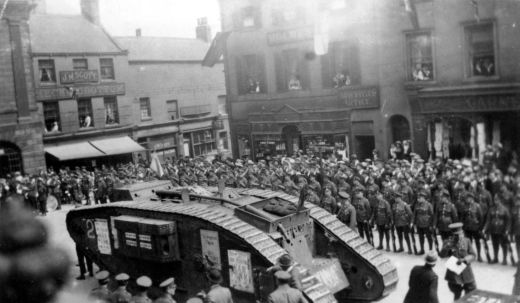 On 14th July 1919, a World War I tank (tank No. 289) was awarded to Pontefract by General Benson in recognition of the town’s having subscribed over £2m in War Loans: it was kept at the castle, being removed on 26th September 1934 to Nevison’s Leap and later cut up for salvage in World War II. On 14th July 1919, a World War I tank (tank No. 289) was awarded to Pontefract by General Benson in recognition of the town’s having subscribed over £2m in War Loans: it was kept at the castle, being removed on 26th September 1934 to Nevison’s Leap and later cut up for salvage in World War II.
|
| 15/7/1300 | In July 1300, Edward I successfully besieged Caerlaverock Castle on his latest Scottish campaign with Thomas, Earl of Lancaster and future lord of Pontefract, his brother, Henry, and their sixteen-years-old cousin, Edward of Caernarfon (future Edward II) in attendance. |
| 15/7/1483 | On 15th July 1483, Richard III, lord of Sandal, appointed the Duke of Buckingham as Lord High Constable of England, a higher rank than given to John Howard, Duke of Norfolk. Cornelius Aurelius, author of the early sixteenth-century account, ‘Divisiekroniek’, written in the Low Countries, claimed that Buckingham was responsible for the fate of Edward IV’s two sons, the noted ‘Princes in the Tower’. Aurelius claimed: ‘the Duke of Buckingham killed these children hoping to become king himself….he had read a prophecy about a future King Henry of England….and he believed himself to be this for he was called Henry. And some say..that this Henry…killed only one child and spared the other….and had him secretly abducted out of the country. This child was called Richard…..he came to Brabant to Lady Margaret his aunt…the widow of Duke Charles of Burgundy.’ |
| 15/7/1645 | On 15th July 1645, rumours of impending relief reached the Royalist castle and some of the garrison ventured into the orchard obtaining a considerable supply of apples. Two were killed and others wounded on this venture. In the afternoon, a drum was sent to the castle saying that General Goring and Langdale were routed, and that Cromwell, Fairfax and Rossiter were coming to the besiegers' assistance. The last hope of the garrison was now destroyed and they found themselves surrounded by enemies it was impossible to vanquish. |
| 15/7/1928 | On 15th July 1928, a parade and drum-head service was held in the grounds of Pontefract Castle attended by 1,000 members of the St John Ambulance Brigade from all parts of the West Riding. Brigadier-General C.R. Ingham Brooke led the proceedings. |
| 16/7/1361 | On 16th July 1361, Henry of Grosmont’s, 1st Duke of Lancaster and lord of Pontefract, lands were officially divided between his two daughters: Maud received the land south of the River Trent and Blanche those in the north where her husband, John of Gaunt was already Earl of Richmond. |
| 16/7/1369 | On 16th July 1369, John of Gaunt, lord of Pontefract, proceeded to Calais in readiness for a raid into Artois. Edward III could not follow Gaunt as Queen Philippa was ill, leaving Gaunt being shadowed by Charles V’s Normandy troops. Gaunt failed to take the port of Harfleur and assumed a stand-off with the Duke of Burgundy near Ardres with neither side risking a battle. |
| 16/7/1377 | On 16th July 1377, Richard II was crowned at Westminster Abbey in an abbreviated ceremony to reflect his young age and then carried to Westminster Hall for the coronation banquet. John of Gaunt, lord of Pontefract, presided as Lord Steward. Richard was to die at Pontefract Castle twenty-three years later. |
| 16/7/1645 | On 16th July 1645, Parliament's Colonel General Poyntz sent a letter to the governor of the castle, again summoning him to surrender the castle, and that if he did he might gain honourable terms. The honourable terms were to this effect “That whereas they had heretofore sent to summons the castle which was still rejected, but now taking into consideration the great care and love so many gentlemen soldiers in the castle, and the misery they lived in, the effusion of so much innocent blood which was likely to be made, and many a sackless man in it, they thought once more to summons them, and give them to understand that if they pleased to come to a treaty about surrendering the same they would treat them upon honourable terms with conditions fitting for such a garrison and would give hostages for the same" To this, the governor replied “That it was a matter of too great consequence to treat or give answer at first but he would confer with the knights and the gentlemen of the castle and return an answer as speedily as possible” |
| 16/7/1890 | On 16th July 1890, the second annual Pontefract tennis tournament, with five events, commenced in the grounds of the castle. |
Last week in history
| Date | Event |
|---|---|
| 6/7/1296 | On the Octaves of Apostles Peter and Paul (6th July 1296), magnates and prelates of Scotland assembled a parliament at Stirling. The Chronicle of Lanercost records: ‘They insultingly refused audience to my lord the Earl of Warenne (Lord of Sandal), father-in-law of the King of Scotland, and to the other envoys of my lord the King of England ; nor would they even allow so great a man, albeit a kinsman of their own king, to enter the castle.’ |
| 6/7/1310 | On 6th July 1310, Sir Henry de Lacy, lord of Pontefract, was made Steward of the Manor of Deeping in Lincolnshire. |
| 6/7/1388 | On 6th July 1388, John of Gaunt, lord of Pontefract, ratified the Treaty of Bayonne (Trancoso) renouncing his rights to the throne of Castile. The marriage of the heirs of both John I of Castile and Gaunt was agreed to with both created as ‘Prince and Princess of the Asturias’ and succeeding John I. All the sons of Pedro I still in prison were to be released and those in exile allowed to return to Castile. There was also an obligation for the King of Castile to pay compensation to Gaunt of 600,000 gold francs. |
| 6/7/1449 | On the 6th July 1449, Richard Duke of York, owner of Sandal castle, arrived at Howth (a peninsular outside of Dublin) to take up his position as Lord Lieutenant of Ireland. It is said that he was 'received with great honour' whilst he had been given complete control over all of the income from Ireland as well as being granted 4000 marks (£2.2 million today) from England for his first two years there, to be followed by an income of £2000 (£1.7 million today) per annum for each year that followed. |
| 6/7/1483 | On 6th July 1483, Richard, Duke of Gloucester, lord of Sandal, was crowned Richard III before his Queen, Anne Neville, at Westminster Abbey by Thomas Bourchier, Archbishop of Canterbury. Anne’s train was borne by Margaret, Countess of Richmond, mother of the future Henry VII. Albeit generally regarded as a magnificent ceremony, not everyone viewed it as such. A contemporary chronicler, Fabyan, noted: ‘some lords..murmured and grudged against him, in such wise that few or none favoured his party except it were for dread or for the great gifts they received from him.’ At Westminster Hall’s ceremonial banquet, the King’s Champion, Sir Robert Dymock, entered on horseback in armour and challenged anyone to question Richard’s right to be king. The Hall erupted into an acclamation of ‘King Richard’. |
| 6/7/1645 | On 6th July 1645, Nathan Drake, Royalist diarist, recorded: ‘ …This night we saw 2 boanfires betwixt wentbridge & dauncaster, we supposed they was for horse gaurdes. This night also we had a letter Came into the Castle from the 2 went out 4 daies since to the Kinges Army, wth good newes ‘ |
| 6/7/1648 | On 6th July 1648, Parliamentarian Colonel Sir Edward Rossiter wrote from Nottingham to William Lenthall, Speaker of the House of Commons: ‘It hath pleased God to give us a seasonable victory over the Pontefract forces, an increasing, active, and resolved enemy. . . The timely advance of Sir Henry Cholmely with those under his command — stopping their retreat by his lying on the North side Trent — gave us this opportunity of fighting them. My present indisposition occasioned by my wounds received in this sharp engagement will not give me leave to present you with an account thereof in writing. I have therefore sent my Captain- Lieutenant to give you a full narrative of the whole business.’. The Commons Journals also noted that on 6th July 1648: ‘A letter from Colonel Edward Rossiter ….giving notice of the great victory it has pleased God to bestow upon the forces under his command against the Pontefract forces under the command of Sir Philip Mouncton (sic), general, on the 5th July 1648, in Willoughby fields.’ The battle in Nottinghamshire, close to the Leicestershire border, had seen Royalist soldiers from Pontefract Castle on their way to relieve the siege of Colchester, defeated by a combined Midlands’ force of Parliamentarians. |
| 6/7/1933 | On 6th July 1933, an urn in Henry VII’s chapel in Westminster Abbey containing bones, possibly of the ‘Princes in The Tower’ was opened in the presence of the Dean of Westminster, Lord Moynihan, Sir Knapp-Fisher (Chapter clerk), Lawrence E Tanner, Professor W Wright, Mr Aymer Vallance, Mr W Bishop (clerk of the works), Mr G C Drake (dean’s verger) and four Abbey staff. The aim of the investigation was to determine whether the remains were those of Edward V and his younger brother, Richard of York, and shed light on the manner of (and possibly responsibility for) their deaths. Richard III, lord of Sandal, has, since their disappearance in late summer 1483, been implicated in their supposed deaths by many historians albeit other perpetrators have been named and no ‘smoking gun’ for any person has been found. |
| 7/7/1307 | On 7th July 1307, Sir Henry de Lacy, lord of Pontefract, was present at the deathbed of Edward I at Burgh-by-Sands, six miles northwest of Carlisle, on the king’s journey to Scotland. He was one of only three people to whom letters were written by the royal household concerning Edward’s death; the others being Queen Eleanor and Edward, Prince of Wales. |
| 7/7/1447 | Richard Duke of York's (lord of Sandal Castle) son, William, was born at Fotheringhay on Friday 7th July 1447. |
| 7/7/1645 | On 7th July 1645, Nathan Drake, Royalist diarist, recorded: ‘ This morning about 8 a Clock there Came in 200 horse Thorough the Parke and they drew up into the west field. We supposed they came from Sandoll, for the seege is raised from thence. This day also Came in the Scottes both horse & foot, for so enemyes Souldyers out of theire quarters tould us….’ |
| 7/7/1648 | On 7th July 1648, Parliamentarian Sir John Bourchier wrote to William Lenthall, Speaker of the House of Commons, desiring that two of the collectors of the Revenue might be credited in their accounts with two sums of £59 (£10355 in today’s money) and £50 (£8800) respectively advanced by them for setting forth the Yorkshire forces sent against the enemy at Pontefract. |
| 7/7/1928 | On 7th July 1928, a tennis tournament was held in the grounds of Pontefract Castle with play not concluding until dusk. |
| 8/7/1281 | On 8th July 1281, Sir Henry de Lacy, lord of Pontefract, provided testimony to the Crown about the surrender of Welsh 'rebel', Ifor ap Gruffud. |
| 8/7/1423 | On 8th July 1423, the Calendar of Patent Rolls recorded that William Welles was appointed “to take and provide beeves, muttons, fish, capons, hens, chickens, geese and other victuals belonging to the offices of the caterer and of the poultry for the household expenses of the king of Scots during his journey to Pontefract, and for his return to London”. James I of Scotland (king in absentia) was taken to Pontefract for negotiations regarding his release from English captivity. |
| 8/7/1645 | On 8th July 1645, Parliament's Colonel General Poyntz went down to the Barbican and asked to speak to the governor of the garrison. The governor's son said his father was not there. General Poyntz demanded the surrender of the castle and said that if they did this within three days they would obtain honourable terms. If they delayed eleven or fourteen days, they might expect nothing but to walk with a white rod in their hands as soldiers did in the Low Countries. The governor's son replied 'that the castle be kept for the King and that if they stayed 14 days and 14 after that, there were as many gentleman in the castle as would make many a bloody head before they parted with it'. Soon after this, General Poyntz said goodnight and went away. |
| 8/7/1887 | On 8th July 1887, it was reported that Sandal Castle and its grounds had been handed over to the Local Board by Sir Lionel Pilkington. |
| 9/7/1297 | On 9th July 1297, Edward I ordered the tenants of Thomas of Lancaster’s (Earl of Lancaster and future lord of Pontefract) late father, Edmund, to do homage to Thomas, albeit he was underage, probably nineteen. |
| 9/7/1398 | On 9th July 1398, Henry Bolingbroke was at Pontefract Castle with his father, John of Gaunt, on his travels around the country. He had been ordered by Richard II to settle a dispute with Thomas Mowbray, Duke of Norfolk and ex-Earl Marshal, concerning ‘slanderous’ allegations of murder Henry had made against Mowbray. The settlement would be by way of a duel at Coventry in the autumn. |
| 9/7/1403 | On 9th July 1403, after Prince Henry (later to be Henry V) had assumed the formal lieutenancy of Wales, Harry Hotspur announced in Chester that Richard II, Pontefract’s most famous prisoner, had not died at Pontefract Castles in 1400 but would appear in public in eight days’ time with an army led by Hotspur’s father, the Earl of Northumberland. The House of Lancaster would be obliterated. One chronicler described Hotspur’s gullible followers as ‘a multitude of imbeciles of both sexes, defrauded by desire’. |
| 9/7/1645 | On 9th July 1645, the besieging Parliamentary forces began a fence from their works opposite Swillington Tower, along the hedge to Denwell Lane and from this position they greatly annoyed anyone coming from the castle to cut grass. |
| 9/7/2023 | 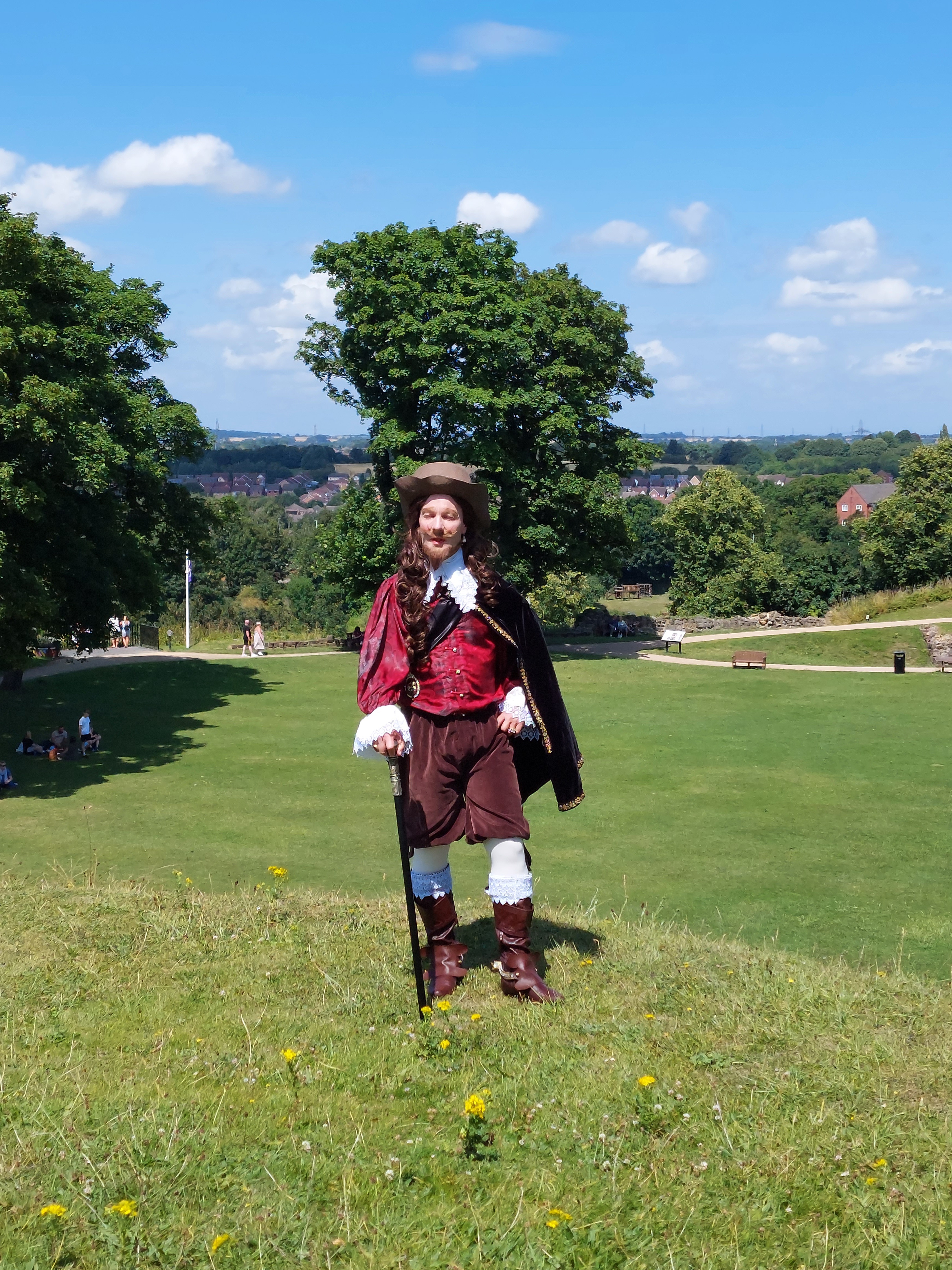 On 9th July 2023, on the day of Pontefract’s Liquorice Festival, Daniel Williams assumed the role of King Charles I on his visit to the castle. Daniel, an avid ‘follower’ from childhood of Britain’s famously executed Civil Wars’ monarch, has appeared as Charles at a range of events over the past six years, such as the Gloucester History Festival, at Dunfermline, Scotland, the Cotswolds and many others. As Daniel remarked: the last time Charles I visited Pontefract was his staying at the castle on May 23 1633, during his 'Great Progress' of the nation to Scotland for his coronation in Edinburgh at the Palace of Holyroodhouse on 18th June. On 9th July 2023, on the day of Pontefract’s Liquorice Festival, Daniel Williams assumed the role of King Charles I on his visit to the castle. Daniel, an avid ‘follower’ from childhood of Britain’s famously executed Civil Wars’ monarch, has appeared as Charles at a range of events over the past six years, such as the Gloucester History Festival, at Dunfermline, Scotland, the Cotswolds and many others. As Daniel remarked: the last time Charles I visited Pontefract was his staying at the castle on May 23 1633, during his 'Great Progress' of the nation to Scotland for his coronation in Edinburgh at the Palace of Holyroodhouse on 18th June. |
| 10/7/1237 | On 10th July 1237, John de Lacy, lord of Pontefract, was made Constable of Chester and Beeston Castles. |
| 10/7/1423 | On 10th July 1423, safe conduct was granted to William de Fowlis, secretary of Archibald, Earl of Douglas, to travel to Pontefract to treat for a final peace between Scotland and England. |
| 10/7/1645 | On 10th July 1645, the besieged Royalist garrison received an account of the engagement between Sir Thomas Fairfax and General Goring, when it was said that Goring routed Sir Thomas and that Taunton was taken. A drum came from Newark to know whether the castle had surrendered as the Parliamentary forces had spread the rumour that Pontefract Castle had yielded to them. The drum had been kept a prisoner overnight in the house of a Mrs Washington whose husband was in the castle. The drum and Mrs Washington went to the castle where the message was passed on and Mrs Washington, while pretending to shake hands with an acquaintance, gave him two letters. These letters named the day and hour when Sir Marmaduke Langdale intended to come to the garrison's relief and confirmed the account of Goring's victory over Sir Thomas Fairfax. Thus the garrison was encouraged and still continued to annoy the Parliamentary forces as much as possible. |
| 11/7/1372 | On 11th July 1372, Edward III’s fourth surviving son, Edmund of Langley, married his elder brother John of Gaunt’s (lord of Pontefract) wife’s younger sister, Isabella of Castile. She was the daughter of the late King Peter of Castile meaning that Edmund and his heirs were now ‘reserves’ in line for the Castilian throne behind Gaunt. |
| 11/7/1645 | On 11th July 1645, Nathan Drake, Royalist diarist, recorded: ‘ ….This evnings there was 2 boanfires made upon Sandoll Castle, wch we answered wth one from the Round Tower. This day the 2 men wch we sent out 10 daies since to Newarke Came againe to towne, & though they Could not get into the Castle to us yet they Showed forth such signes as we knew we had good newes towards us. This night 2 of those men we sent out 2 nightes before to Sandoll cami in againe.’ |
| 11/7/1656 | On 11th July 1656, Mary Fisher of Pontefract, and another preacher, Ann Austin, were the first Quakers to visit the English North American colonies arriving in Boston’s Massachusetts Bay Colony on board the Swallow. Having already converted the island of Barbados’s Lieutenant Governor to Quakerism, their reception by the New England Puritans was decidedly more hostile and they were imprisoned for five weeks, undressed in public and examined for signs of witchcraft with their books and pamphlets burned, then deported back to Barbados. A 1658 mission ‘testifying to the Universal Light’ (her words) to the Ottoman Empire to explain Quakerism to Sultan Mehmed IV was received attentively and ‘he was very noble unto me and so were all that were about him’. |
| 12/7/1203 | On the 12th July 1203, Isabel de Warenne, the widow of Hamelin de Plantagenet and the 4th Earl of Surrey and owner of Sandal castle, died and was buried next to Hamelin in the Chapter House at Lewes Priory. |
| 12/7/1288 | On 12th July 1288, Alice de Lacy, daughter of Sir Henry de Lacy, lord of Pontefract, was granted letters patent of the castle, town, manor and Honour of Halton in the county of Chester, for and during her life with reversion after her death to the king and his heirs. |
| 12/7/1383 | On 12th July 1383, after the Scots had attacked Wark Castle on the border, John of Gaunt, lord of Pontefract, held talks with their king’s heir, Earl John of Carrick, at Muirhouselaw with a truce agreed on 17th July to last until 2nd February the following year. |
| 12/7/1444 | On 12th July 1444, a Charter of Confirmation was made at Pontefract by, John, 7th Earl of Sutherland: ‘Charter of Confirmation by John, seventh Earl of Sutherland, to Alexander Sutherland, lord of Torboll, of the lands of Torboll. Confirmation, by John, seventh Earl of Sutherland, narrating that he had seen and caused to be read before him at Pontefract in England, a resignation made by Nicholas of Sutherland, lord of the castle of Duffus, at St. Andrew's chapel, of the lands and tenements of Thurboll with the pertinents, namely, lands to the worth of £40 lying within the earldom of Sutherland and shire of Inverness, into the hands of Robert, Earl of Sutherland, as his overlord, whereupon the Earl granted them to Henry of Sutherland, son of Nicholas, in fee and heritage, to him and his heirs male from the Earl and his heirs, for payment of ward and relief and for rendering three suits at the court of the said Earl in Sutherland.’ |
| 12/7/1537 | On 12th July 1537, Robert Aske, one of the leaders of the Pilgrimage of Grace, who had besieged Pontefract Castle the previous year, was drawn through the main streets of York on a hurdle prior to execution on a special scaffold erected outside Clifford’s Tower. Rather than experience a traditional hanging, Aske was reputedly hanged alive in chains being slowly suffocated to death, taking several days to die. |
| 12/7/1645 | On 12th July 1645, Royalist troops received a letter that Sir Marmaduke Langdale had set off with his own forces and 4,000 Irish to raise the siege of Pontefract Castle. The letter was designed to raise spirits and produced the effect intended and the castle agreed to suffer any privations rather than submit to disgraceful terms. If relief did not come, they would consume all food in the castle, set it on fire and either cut their way out through the enemy or nobly fall. After this, two flags of defiance were flown, one from the King's Tower and one from the Round Tower. |
Next week in history
| Date | Event |
|---|---|
| 20/7/1318 | On 20th July 1318, a second conciliatory mission met Thomas, Earl of Lancaster and lord of Pontefract, comprising much the same personnel as the first one earlier that month but with Roger Mortimer replacing Hugh Despenser the Younger. Negotiations were centred around Edward II’s observance of the Ordinances imposed on him in 1311. |
| 20/7/1381 | Throughout June 1381, the Peasant's Revolt had brought chaos and turmoil to the kingdom of the young King Richard II. As John of Gaunt, lord of Pontefract Castle, was the quasi-ruler of England during the young king’s minority, much of the anger of the mob was directed at him; in order to pay for the war in France, Gaunt had replaced the graduated rate of tax by the poll tax, which levied a tax of one shilling per head (£31 in today’s money) across the whole population. It was mainly due to the bravery of Richard II confronting the protesters that the revolt was defeated but not before the Savoy Palace, the grand London home of John of Gaunt, was totally destroyed. Fortunately, John was in Berwick, but his second wife, Constance, had fled north to seek refuge at Pontefract Castle, only to be refused entry by the constable. We can perhaps speculate that the reason for this was that John of Gaunt’s mistress, Katherine Swynford, having been sent north to Pontefract, was already in residence. We know that John was in residence at Pontefract from the 20th to 21st July 1381 having sent his household there, arranging for firewood and the best wine to be delivered to the castle. |
| 20/7/1455 | Richard Duke of York's (lord of Sandal Castle) daughter, Ursula, was born at Fotheringhay, Sunday 20th July 1455. |
| 20/7/1645 | On 20th July 1645, the Royalists and Parliamentarians met and a treaty was made and signed for the surrender of Pontefract Castle. The siege had lasted nearly five months and the besieged Royalists had shown great courage. The treaty stated that 'the castle is to be delivered up to the parliament tomorrow at 8 o'clock with everything therein, save that the officers are allowed to carry away what is properly their own, so that it exceeds not what a cloak bag will contain, and the garrison are to march to Newark'. Thus ended the second siege of Pontefract Castle during which the Parliamentarians lost 469 soldiers whilst the besieged lost 99 persons. The local gentry who had assisted in the defence of the castle obtained permission to return to their homes, but continued to be closely watched by the Parliamentarians and were all heavily fined for their obstinate adherence to the Royalist cause. |
| 20/7/1648 | On 20th July 1648, a Council of War at Pontefract Castle agreed:
These ensueing orders are agreed vpon att a Councell of Warr in Pontefract Castle July 20th 1648.
First Itt is ordered & agreed vpon that after the armeinge of the Goun, Co |
| 20/7/1859 | On 20th July 1859, Jeannette Emmett Leatham (Cunard) was born in New York , the daughter of Sir Edward Cunard, 2nd Baronet, and Mary Bachelor McEvers. Part of the Cunard shipping family, Jeannette married Edward Leatham on 28th July 1883 and devoted her time to philanthropic causes, supporting children’s homes and helping to create the pleasure gardens and museum at Pontefract Castle. She died on 12th October 1919. |
| 21/7/1476 | On Sunday 21st July 1476, the bodies of Richard, 3rd Duke of York and his son Edmund, Earl of Rutland, were exhumed at the Priory of St Richard near Pontefract Castle, both killed at Wakefield some sixteen years before. Their coffins were placed beneath cloths of gold coverings bearing a white satin cross with so many burning candles surrounding the caskets that the church’s doors had to be kept open and some windows removed. A life-sized effigy of York kneeling in prayer above his coffin, was dressed in dark blue gowns trimmed with ermine, the mourning clothes of a king. His claim to have been King by Right of England and France was reinforced by an angel holding a crown just above his head. |
| 21/7/1484 | By 21st July 1484, Richard III was establishing the Council of the North with places of residence at Sandal Castle and Sheriff Hutton. The Council was now institutionalised as a formal branch of the royal council proper under the presidency of John de la Pole, Earl of Lincoln, Richard’s nephew and heir. Its main objectives were to give justice and promote peace throughout the northern shires of Yorkshire, Durham, Cumberland, Westmorland and Northumberland. Edward IV had given his brother, Richard, pre-eminence beyond the Trent in 1472 as ‘Lord of the North’ and the Council possessed both civil and criminal jurisdiction, the power of investigating, commanding the presence of witnesses by subpoena, ordering by decree, giving verdicts and setting penalties. Only some of its members are known: Clarence’s son, the Earl of Warwick; Lord Morley and Henry Percy, Earl of Northumberland; Lord Scrope of Bolton; Baron Greystoke; Sir Francis Lovell; Sir James Harrington and Sir William Parre. The Council’s budget was 2,000 marks per annum (£1.72 million in today’s money) and was to meet every three months at least at York. The Council remained operational in various forms until 1641. Its regulations included: “These articles following be ordained and established by the king’s grace to be used and executed by my Lord of Lincoln and the lords and others of his council in the North parts for his surety and the well-being of the inhabitants of the same. First, the king wills that no lord nor other person appointed to be of his council, for favour, affection, hate, malice or bribery, shall speak in the otherwise than the king’s laws and good conscience shall require, but be indifferent and in no way partial, as far as his wit and reason will allow him, in all manner of matters that shall be administered before them... [The] council shall meet, wholly if it may be, once in the quarter of the year at least, at York, to hear, examine and order all bills of complaints and others shown there before them, and oftener if the case require. [The] council shall have authority and power to order and direct [in respect of] all riots, forcible entries, disputes and other misbehaviours against our laws and peace...in these parts... [Our] council, for great riots...committed in the great lordships or otherwise by any person, shall commit that person to ward in one of our castles near where the riot is committed... [The] council, as soon as they have knowledge of any assemblies or gatherings made contrary to our laws and peace, [shall arrange] to resist, withstand and punish the same... [We] will and straitly charge all and each of our officers, true liegemen and subjects in these north parts to be at all times obedient to the commandments of our council in our name, and duly to execute the same, as they and each of them will eschew our great displeasure and indignation... " |
| 21/7/1627 | On 21st July 1627, John Savile was created 1st Baron Savile of Pontefract. He had been MP for Lincoln, Sheriff of Lincolnshire, Knight of the Shire for Yorkshire, custos rotulorum of the West Riding of Yorkshire (principal justice of the peace in an English county), Privy Councillor, Comptroller of The Household and receiver of the revenues from recusants in the north. He had a long-standing feud with Thomas Wentworth (later Earl of Strafford) which included a famous dispute in Parliament. Savile built Howley Hall in Batley (he was buried in Batley Church in September 1630) and tradition says that Rubens stayed there and painted a view of Pontefract for him. |
| 21/7/1645 | On 21st July 1645, Pontefract Castle was surrendered to Parliament by its Royalist garrison. |
| 22/7/1240 | On 22nd July 1240, John de Lacy, lord of Pontefract Castle, died. He was one of the 25 barons who forced the royal sealing and overseeing of the enactment of Magna Carta in 1215. |
| 22/7/1298 | On 22 July 1298, Sir Henry de Lacy, lord of Pontefract, in the First War of Scottish Independence, led the first line of English cavalry at the Battle of Falkirk against the Scots under William Wallace. Scottish casualties were heavy and although Wallace evaded capture, he soon resigned as Guardian of Scotland. Reputedly, Edward I’s huge army for this campaign was in the order of 26,000 men and 3,000 cavalry. |
| 22/7/1298 | On 22nd July 1298, John de Warenne , 6th Earl of Surrey and owner of Sandal Castle, was present at the Battle of Falkirk which would prove a decisive English victory in Edward I's conflict with the Scots. |
| 22/7/1395 | On 22nd July 1395, delegates from the Duchy of Aquitaine met Richard II at Eltham Palace to tell the king that Aquitaine was irrevocably annexed to the Crown of England and could not be given away by him. Evidence produced included a letter by Edward III publicly affirming the duchy’s established status and assurances by Richard himself during earlier negotiations that Aquitaine’s privileges were ‘sacrosanct’. A plan had been mooted to grant Aquitaine to John of Gaunt, lord of Pontefract, so that Richard could avoid doing homage to the King of France for this territory. |
| 22/7/1476 | On 22nd July 1476, the Fotheringhay Procession left Pontefract with the bodies of Richard Duke of York (former lord of Sandal Castle) and his son Edmund Earl of Rutland, who had both been killed at the Battle of Wakefield in December 1460. These bodies had been interred in the Franciscan Friary of St Richard, which was located on the site of the present day Valley Gardens. Led by Richard, Duke of Gloucester, the procession passed through Doncaster, Blyth, Newark, Grantham and Stamford reaching Fotheringhay on the 29th July. |
| 22/7/1537 | On 22nd July 1537, Lord Darcy, Constable of Pontefract Castle during the previous year’s Pilgrimage of Grace, who had been beheaded for treason three weeks before, was posthumously degraded from his rank as Knight of the Garter and his vacant stall bestowed upon Thomas Cromwell, who had drawn up the charges against him and had then been one of his judges. |
| 22/7/1645 | On 22nd July 1645, Parliament's Colonel General Poyntz called on the Royalist defenders to surrender Sandal Castle, but they rejected the call, although hopes of immediate relief were remote. |
| 22/7/1679 | On 22nd July 1679, after the passing of the Act of Uniformity (1662) against popish recusants intent on re-establishing Roman Catholicism and conspiring against the life of Charles II, an affidavit was presented to the Sessions at Pontefract: ‘As for Mr Thomas Hippon and Alis Hippon, they become bound before Mr Whyte to appear at this Session, as popish recusants. As for Mr John Hippon, Margaret Thimbleby and Alis the wife of John Spinke, they are non est Inuentus’ i.e. not yet found in this jurisdiction. |
| 22/7/1966 | On 22nd July 1966, Ferrybridge Henge and two round barrows were first listed and protected as a Scheduled Ancient Monument: List Entry Number: 1005789. A Neolithic henge near Ferrybridge, West Yorkshire (grid reference SE47462424), it is close to the A1 and M62 and Ferrybridge power station. Ferrybridge Henge is the furthest south of Yorkshire's henges, and is the only one in West Yorkshire. There was activity on the site before the current henge in the form of circular monuments and hengiform monuments dating from 3500 BC to 3000 BC. Ferrybridge Henge dates from around 3000 BC to 2500 BC. Around 2000 BC–1500 BC, during the early Bronze Age, barrow burials were performed on the site. Inhumations were discovered with grave goods such as ceramic pots and flint tools. The area was probably abandoned from about 1500 BC to 500 BC when there was some reoccupation by Iron Age farmers. The henge was not cultivated and may have been retained as a shrine for the Iron Age people of the area and later during the Romano-British period. An Iron Age sword scabbard was discovered in the inner henge ditch as well as a Roman coin. That burials continued in the area around the henge in the Saxon period despite the presence of a Christian cemetery nearby has been taken as evidence of pagan beliefs prevailing in the area. Ferrybridge Henge and its surrounding area were used as farmland during the medieval period. The site was excavated by West Yorkshire Archaeological Services in 1991. In 2007, a suspected extension of the henge was unearthed near Pontefract. It was discovered when archaeologists were investigating a site intended for the construction of a row of houses; once the archaeological survey was complete, the construction went ahead. Ferrybridge Henge is a circular site and is about 180 metres (590 ft) in diameter. The henge is surrounded by two ditches and a bank. The inner ditch is 10 metres (33 ft) wide and 2.5 metres (8.2 ft) deep. There is a 15-metre (49 ft) wide berm between the inner ditch and a 15-metre (49 ft) wide limestone bank. Separating the bank from the outer ditch is another berm, also 15 metres (49 ft) wide; the outer ditch is 12 metres (39 ft) wide and 1.5 metres (4.9 ft) deep. This layout is typical of other henges. The site has two entrances, one in the north east and one in the south west. |
| 22/7/2016 | 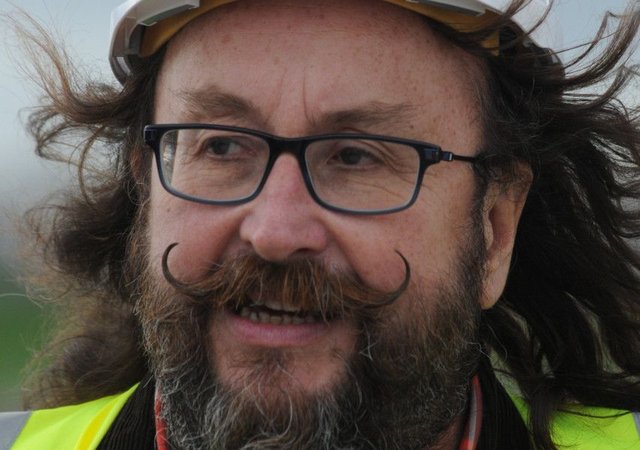 On 22nd July 2016, the television programme, 'The Hairy Builder with Dave Myers' was broadcast on BBC2. The programme showed Dave Myers (one of the two famous 'Hairy Biker' cooks ) helping builders restore parts of Pontefract Castle for future generations. On 22nd July 2016, the television programme, 'The Hairy Builder with Dave Myers' was broadcast on BBC2. The programme showed Dave Myers (one of the two famous 'Hairy Biker' cooks ) helping builders restore parts of Pontefract Castle for future generations. |
| 23/7/1215 | On 23rd July 1215 King John wrote a strongly-worded letter, from a council at Oxford, to the men of Yorkshire, covering all ranks (and by implication John de Lacy, lord of Pontefract), to hand back possessions they had seized from the king, by the 15th August; the same date that London was to be returned to the king. On the 16th July, at Oxford King John had demanded the restoration of his treasure from London plus the formal restoration of peace. The barons had sought to extend their power over institutions such as the Exchequer in addition to presenting further claims for restoration of lands from the king and intervening in the appointment of local officials to secure favourable terms. Unsurprisingly the council ended abruptly with the Barons leaving "with great rancour". |
| 23/7/1229 | On 23rd July 1229, John de Lacy, lord of Pontefract, was at the Northampton council convened by Henry III which agreed to muster an army and fleet at Portsmouth on 13th October to recover 'lost' lands in France. |
| 23/7/1326 | On 23rd July 1326, Henry of Lancaster, brother of the executed Thomas, Earl of Lancaster, and later to be lord of Pontefract when Edward III returned the earldom to him, was made Joint Commissioner of Array in the counties of Warwick, Leicester, Nottingham and Derby by Edward II. The king was now under enormous pressure to mobilise his defences against possible invasion by France or Roger Mortimer and his mistress, Queen Isabella. |
| 23/7/1483 | On 23rd July 1483, Richard III, lord of Sandal, wrote an agreement protecting the widow (Katherine Neville) and children of Lord Hastings who had been executed for treason the previous month. No attainder was issued meaning that his family kept their titles and land and Hastings’ brother, Ralph was pardoned on 2nd August. |
| 24/7/1454 | On 24th July 1454, Henry Holland, Duke of Exeter, son-in-law of Richard Duke of York, was apprehended and imprisoned in Pontefract Castle. Exeter believed he had been overlooked for the Protectorship of England, granted to York on the 27th March ‘by advice and assent of the Lords Spiritual and Temporal of the Commonality of England’ by virtue of Henry VI’s six months’ continuing incapacitation. Exeter was released in mid-March 1455 after Henry’s recovery. |
| 24/7/1484 | On 24th July 1484, a memorandum was implemented by Richard III regarding Sandal Castle: ‘That the household begins 24 July 1484 and continues until 29 September 1485 and in as much as this assignment is not payable before the feast of Easter, the King’s grace has assigned £500 (£535,000 today) to be taken from his coffers towards the expenses and wages of the said household, whereof £100 (£107,000 today) is paid to John Downey, the treasurer, by Master Edmund Chadderton at the feast of Saint Lawrence (10 August 1484)…’ An ordinance accompanying these instructions makes for interesting debate and John Fox has surmised that one Item within this ordinance could indicate the survival of Edward IV’s sons, the famed ‘Princes in the Tower’: ‘my lord of Lincoln and my lord Morley be at one breakfast, the children together at one breakfast…’. Lincoln and Morley did not have children and Richard III’s nephew (Edward) and niece (Margaret) by his dead brother, George, should have been named, as also should any of Edward IV’s daughters released from sanctuary to Richard III by their mother, Elizabeth Woodville. Sandal Castle was a secure, comfortable and isolated location within which to house Richard’s nephews away from political intrigue. A further Item within the ordinance stated: ‘That no boys be in the household but such as be admitted by the council..’ leading Fox to suggest possibly that this was to prevent any news of the former Edward V or his brother the Duke of York reaching the outside world. Coupled with von Popplau’s comments regarding ‘the king’s children and the sons of princes, which are kept like prisoners’ at nearby Pontefract (see the entry for 1st May 1484), the roles of Sandal and/or Pontefract Castles in tumultuous, historical events is ready for more serious investigation. |
| 24/7/1645 |  On 24th July 1645, there was the first mention of Pontefract Castle in the Journals of the House of Commons when Colonel General Poyntz's letter was read announcing its capture. A debate followed, concluding with Sir Thomas Fairfax being ordered by the House to be made military governor.
 |
| 25/7/1328 | On 25th July 1328, Sir Roger Mortimer, Earl of March, who had been party to the deposition of Edward II and now ruled effectively as king with Edward’s widow, Queen Isabella during the minority of Edward III, arrived at Pontefract Castle on his travels from Berwick to York. |
| 25/7/1377 | On 25th July 1377, John of Gaunt was at Pontefract, probably with his mistress Katherine Swynford. With the death of Edward, the Black Prince in 1376, John was the most powerful man in the land. Edward III had died in June 1377 and with the war with France not going well, one of his last acts had been to dissolve Parliament which had refused the Crown’s request for funds. John would begin to undo all the work Parliament had done, making many enemies in the process, whilst making himself defender of both the Crown and royal power. On the 25th July, he granted Katherine the wardship and marriage of the heiress of Bertram de Sauneby in recognition of the 'good and agreeable service' she had and continued to render to 'our dear daughters'. |
| 25/7/1386 | On 25th July 1386, John of Gaunt’s (lord of Pontefract) fleet carrying 7,000 men arrived at Corunna in Galicia, north-west Spain, on his mission to claim Castile. Cleverly picking the Galicians’ celebration of the feast of St James, the English forces met with little, if any, resistance and the holy day was cited as significant in underpinning Gaunt’s claim as Castile’s rightful King. A short stay at Corunna before taking the sacred town of Santiago de Compostela, reinforced, in Gaunt’s eyes, his legitimate claim to Castile. |
| 25/7/1394 | On 25th July 1394, James I of Scotland was born at Dunfermline Abbey, Fife. James had been sent to France for safety over fears about the succession to his father, Robert III, who died in 1406 (James’ elder brother, David, having starved to death in prison in 1402).Captured by pirates, en route to France, at Flamborough Head (some say off the coast of Norfolk) on 22nd March 1406 and handed over to Henry IV, James was held captive by the English for eighteen years in numerous locations until a ransom of £40,000 (£40 million in today's money) was agreed and his marriage in February 1424 to Joan Beaufort secured his release; Joan was a cousin of Henry VI and niece of Thomas Beaufort, 1st Duke of Exeter, and Cardinal Henry Beaumont. James was crowned King of Scotland at Scone Abbey on 21st May 1424 (some say 2nd). He had been held prisoner in Pontefract Castle and this seems to have been during the latter stages of his captivity in England around May-August 1423, possibly even up to early December although James was in Durham during this month. At Pontefract, English and Scottish ambassadors agreed to his release in exchange for an Anglo-Scottish truce. James’ ransom of £40,000 sterling in ‘expenses’, to be paid off over six years, was set against the redemption of twenty noble hostages. Significantly, this was a deliberately generous reduction of the ransom first sought for James in 1416 and was far short of what had in fact been spent on his residency, wardrobe and retinue. |
| 25/7/1399 | On 25th July 1399, Sir John Pelham, one of John of Gaunt’s (lord of Pontefract) retainers, wrote to his son, Henry Bolingbroke, at Pontefract from Pevensey Castle where he was the Constable: ‘My dear Lord……thank you (for) your comfortable letter that ye sent me from Pontefract that come to me on Mary Magdalene day (22nd July); …I was never so glad as when I heard by your letter that ye were strong enough with the grace of God for to keep you from the malice of your enemies…… I am here by laid in manner of a siege with the county of Sussex, Surrey and a great parcel of Kent, so that I may nought out of none victuals get me but with much hard. Wherefore my dear if it like you by the advice of your wise counsel for to get remedy of the salvation of your castle and withstand the malice the shires aforesaid. And also that ye be fully informed of their great malice workers in these shires which that haves so despitefully wrought to you, and to your castle, to your men and to your tenants for this country have yai (sic) wasted for a great while. Farewell, my dear lord, the holy Trinity you keep from your enemies, and ever send me good tidings of you. Written at Pevensey in the castle on St Jacob day last past.’ This letter is purported to be the oldest private letter in the English language. |
| 26/7/1214 | On 26th July 1214, John de Lacy, lord of Pontefract, was made Keeper of Castle Donington, Leicestershire. This was returned to him by King John in lieu of his surrender of hostages, including his younger brother. |